Birth Control Side Effects: What’s Normal and What’s Not
INTRO
Starting or switching birth control comes with a real learning curve, and the information that comes packed inside the box rarely makes it easy to tell which symptoms are a normal adjustment phase versus a sign that something needs attention. Add in the fact that everyone’s body responds differently to hormonal changes, and it’s easy to feel like you’re navigating this alone without a clear roadmap. This article breaks down exactly what to expect when starting a new method, which symptoms typically resolve on their own, which ones are worth a conversation with your doctor, and which symptoms should prompt you to seek care right away.
Why Side Effects Happen in the First Place
Most hormonal birth control methods work by introducing synthetic versions of estrogen, progestin, or both into your system at levels designed to prevent ovulation, thicken cervical mucus to block sperm, or thin the uterine lining. Your body needs time to adjust to this new hormonal environment, which is why the first few months on any new method tend to involve the most noticeable side effects, with most settling significantly as your body adapts.
The specific side effects and their intensity also vary depending on the method — the combined pill, progestin-only pill, hormonal IUD, implant, patch, ring, and injection all deliver hormones differently and in different doses, so your experience on one method may differ considerably from another even if both are technically “hormonal birth control.”
Common, Usually Temporary Side Effects
These are the side effects most frequently reported in the first 1 to 3 months of starting or switching methods, and for most women they improve significantly or resolve entirely as the body adjusts.
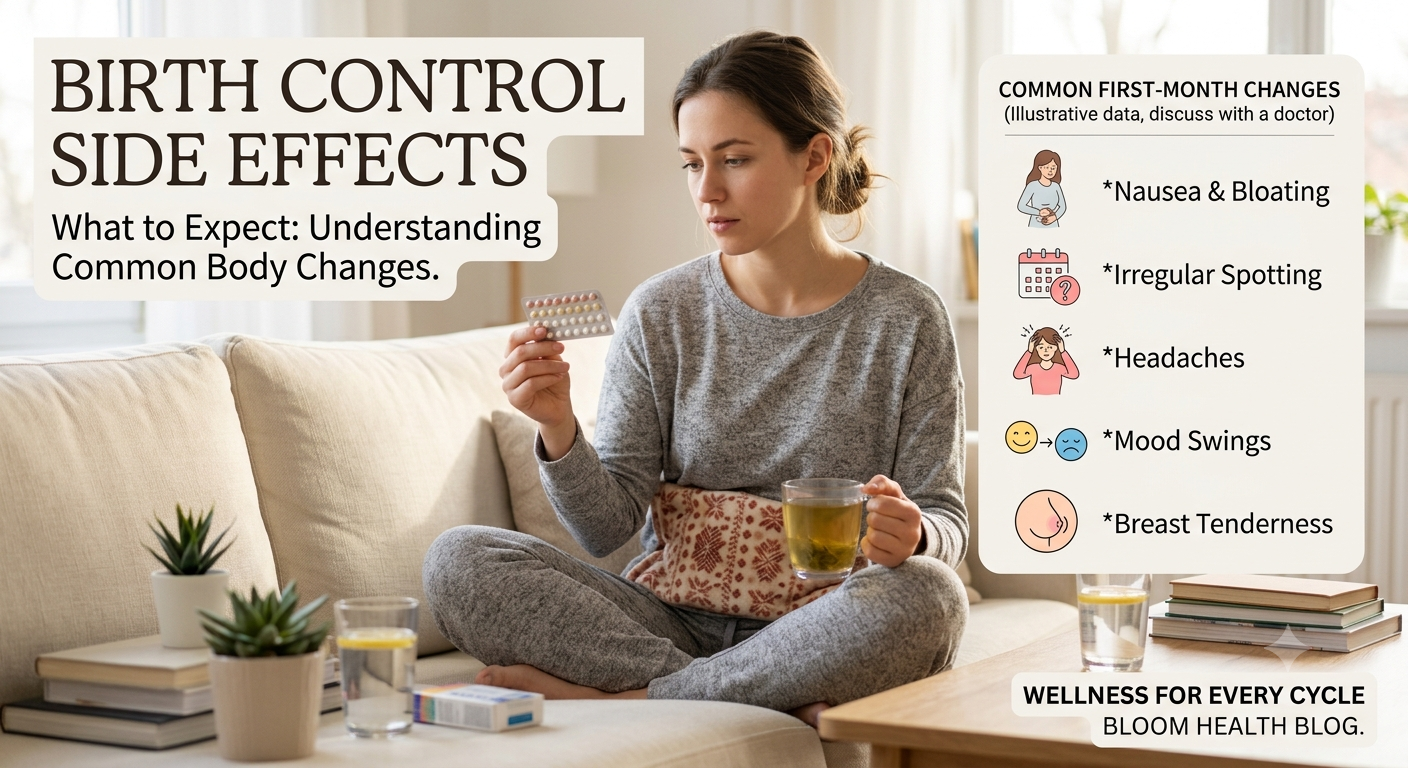
Breakthrough Bleeding or Spotting
This is one of the most common early side effects, particularly with lower-dose pills, the hormonal IUD, and the implant. Spotting between periods or irregular bleeding patterns typically improve substantially within the first 3 months. Track this with our Free Period Tracker so you have a clear record of exactly when and how often it’s occurring — this kind of detail is genuinely useful if you do need to discuss it with your doctor.
Breast Tenderness
Many women notice increased breast sensitivity or mild swelling in the first weeks of starting a new method, similar to premenstrual breast tenderness but sometimes more pronounced. This typically eases as hormone levels stabilize.
Mild Nausea
Particularly common with the combined pill, mild nausea often improves if the pill is taken with food or right before bed rather than on an empty stomach. This side effect tends to resolve within the first few weeks for most women.
Headaches
Mild headaches in the early adjustment weeks are common and usually temporary. However, the type and severity of headache matters here — see the section below on migraines with aura, which is a different and more important consideration.
Mood Changes
Some women notice shifts in mood, particularly in the first few months on a new method. This is a genuinely individual experience — some women notice no change at all, others find their mood improves, and others find it worsens. If mood changes are significant or persist well beyond the typical adjustment window, this is worth discussing rather than assuming it will simply resolve on its own.
These adjustment-phase symptoms typically settle within 3 months as your body fully adapts to the new hormone levels. If you’re still experiencing significant discomfort after that point, it’s reasonable to discuss switching methods with your doctor rather than continuing to push through.
Side Effects Worth Discussing With Your Doctor
These symptoms aren’t necessarily emergencies, but they’re not symptoms you should simply tolerate indefinitely either — they’re worth a conversation at your next appointment, or sooner if they’re significantly affecting your quality of life.
Persistent mood changes that continue well beyond the typical 3-month adjustment period, particularly if they’re affecting your relationships, work, or overall wellbeing.
Significant weight changes that seem clearly linked to starting your method, rather than other lifestyle factors.
Migraines with aura — meaning migraines accompanied by visual disturbances, numbness, or other neurological symptoms preceding the headache itself. This is particularly relevant for combined hormonal methods containing estrogen, as it can affect which method is recommended for you going forward.
Bleeding that doesn’t improve after the typical adjustment period of 3 months, or that seems to be getting worse rather than better over time.
Decreased libido that persists and concerns you, since this is a legitimate and common side effect that’s often under-discussed but absolutely worth raising.
The FDA notes that while serious complications from hormonal birth control are rare, certain symptoms like severe leg pain or chest pain should always be evaluated promptly rather than waited out.
When to Seek Immediate Medical Attention
While rare, certain symptoms can indicate a serious complication and require urgent care rather than simply mentioning it at your next routine appointment.
Severe leg pain or swelling, particularly in one leg, which can be a sign of a blood clot.
Chest pain or sudden shortness of breath, which can indicate a clot has traveled to the lungs.
Severe headache accompanied by vision changes, confusion, or slurred speech, which can be a sign of a more serious neurological event.
Severe abdominal pain, particularly with hormonal methods that carry a small risk of liver-related complications.
Yellowing of the skin or eyes (jaundice), which can indicate a liver issue requiring evaluation.
If you experience any of these symptoms, seek medical care immediately rather than waiting to see if they pass on their own. These complications are rare, but recognizing them quickly genuinely matters.
How to Choose the Right Method If Side Effects Are a Problem
If you’ve given a method a fair adjustment period — typically 3 months — and side effects are still significantly affecting your life, this doesn’t mean birth control isn’t right for you; it often means a different method might be a better fit for your particular body.
Lower-dose pills, progestin-only options, non-hormonal methods like the copper IUD, or different delivery methods entirely (patch versus pill versus IUD, for example) can all produce meaningfully different experiences. This is a genuinely individual process, and it’s completely reasonable to try more than one method before finding the right fit.
What Happens When You Stop Birth Control
Starting a method gets most of the attention, but stopping comes with its own adjustment period — and its own set of common, usually temporary experiences.
Your period may take time to return to its natural rhythm. Hormonal birth control had been controlling your cycle artificially, so once you stop, your body needs to re-establish its own pattern — sometimes called post-pill amenorrhea when periods are delayed for a while. See our guide on how many days late is normal for a period for more on this specific pattern.
Any symptoms birth control was masking may return. If you started birth control partly to manage acne, heavy periods, or painful cramps, those original symptoms can come back once you stop, since the hormones were treating them rather than curing them.
Ovulation and fertility typically return within a few weeks to a few months, though the exact timeline depends on the method — the pill, patch, and ring tend to allow a relatively quick return, while Depo-Provera can take considerably longer, sometimes up to a year. See our guide to tracking ovulation to help identify when it resumes.
Mood and libido changes are commonly reported in either direction as your body’s natural hormone production re-establishes itself — this typically settles within a few months, similar to the adjustment period when starting a method.
Most of these changes are a normal, temporary readjustment rather than a sign of a problem. If your cycle hasn’t returned to some kind of regular pattern within about 3 months of stopping, it’s worth checking in with your doctor.
Frequently Asked Questions
How long do side effects typically last when starting birth control?
Most adjustment symptoms settle within 2 to 3 months as your body adapts to the new hormone levels. If symptoms are still significant after this window, it’s worth discussing alternatives with your doctor.
Can birth control affect my long-term fertility?
No — fertility typically returns to its prior baseline after stopping most methods, though the exact timeline varies. The pill and IUD generally allow for a relatively quick return to your natural cycle, while the injection (Depo-Provera) can take longer, sometimes up to a year, for fertility to fully resume.
Is spotting between periods always a side effect of starting a new method?
Often yes, particularly in the first few months of a new method, but persistent spotting that continues well past the initial adjustment period should be discussed with your doctor, as it can occasionally indicate the dose or method isn’t quite right for you.
Can I switch methods if I’m not happy with my current one?
Yes, absolutely — switching methods is common and your doctor can guide you toward an option better suited to your symptoms, lifestyle, and health history.
Does Birth Control Cause Weight Gain?
This is one of the most persistent birth control myths — and the real answer is more specific and more reassuring than most people expect.
According to Cleveland Clinic, a review of 49 separate studies on combined hormonal contraception (pills and patches containing both estrogen and progestin) found no evidence that these methods cause weight gain. Hormonal IUDs show similarly minimal association with weight change, likely because they release hormones locally rather than throughout the whole body.
The one well-documented exception is the birth control shot (Depo-Provera). Research consistently shows it’s associated with real weight gain for many users — on average about 5 pounds in the first year, with some women gaining more and others none at all. This appears to be linked to how the shot’s progestin affects appetite and fat storage, and the effect tends to be most pronounced in the first 6 to 12 months before leveling off.
If you’re on the pill, patch, or a hormonal IUD and are experiencing meaningful weight changes, it’s worth discussing with your doctor — but know that the evidence doesn’t point to these methods as the direct cause. If you’re specifically concerned about the shot, that’s a legitimate, well-supported concern worth raising before or during use.
The Bottom Line
Most birth control side effects are mild, temporary, and resolve within the first few months as your body adjusts to its new hormonal environment. That said, persistent or severe symptoms deserve a real conversation with your doctor — never feel like you simply have to push through significant discomfort indefinitely, and never ignore the rare but serious warning signs covered above. Use our Free Period Tracker to document any changes clearly from the moment you start a new method, which makes these conversations with your doctor far more productive.
Medical Disclaimer: This article is for educational purposes only and does not constitute medical advice, diagnosis, or treatment. Always consult your doctor or OB-GYN for personal health decisions. Read our full Medical Disclaimer.