

12 Early Pregnancy Symptoms Before a Missed Period

INTRO
The two-week wait — the stretch of days between ovulation and your expected period — is one of the most emotionally charged experiences in a woman’s reproductive life. Whether you are hoping for a positive result or dreading one, the temptation to analyze every sensation in your body is completely understandable. The good news is that your body does start sending signals very early in pregnancy — sometimes as early as 6 to 10 days after conception — long before a missed period confirms what is happening. In this article we are going to walk through the 12 most common early pregnancy symptoms that can appear before a missed period, explain the biology behind each one, and help you understand which signs are most meaningful and which are easily confused with PMS.
Early Pregnancy Symptoms: How Soon Can They Start?
Pregnancy symptoms can theoretically begin as early as 6 to 8 days after conception — which is when implantation typically occurs. Implantation is the process by which the fertilized egg burrows into the uterine lining and begins producing the pregnancy hormone hCG (human chorionic gonadotropin).
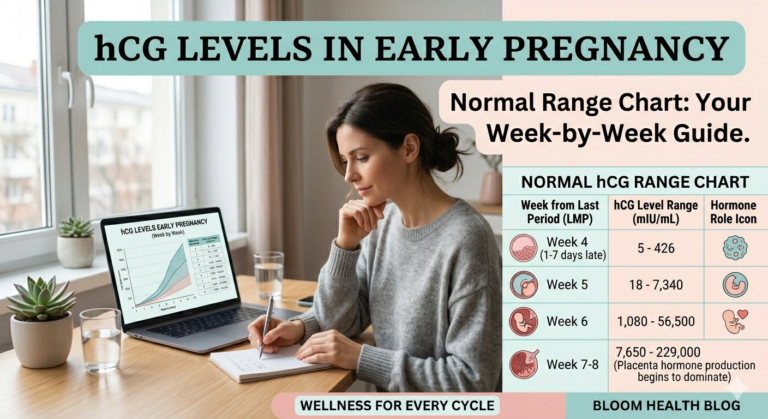
It is hCG that drives the majority of early pregnancy symptoms. As hCG levels rise — doubling approximately every 48 to 72 hours in a healthy early pregnancy — symptoms typically intensify. See our guide to normal hCG levels in early pregnancy to understand what your levels should look like week by week. This is why symptoms that begin subtly in the first week or two after conception often become much more pronounced by 6 to 8 weeks.
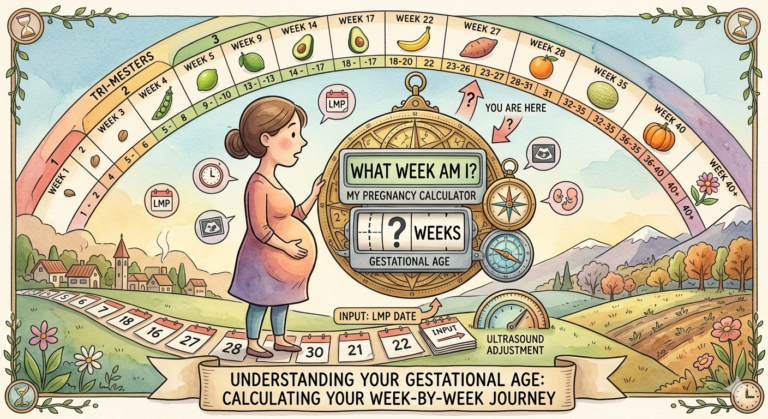
Use our Free hCG Calculator to understand what hCG levels are normal for each week of early pregnancy — and our Free Due Date Calculator to calculate your estimated due date once you have a positive test.
It is also important to acknowledge that many women experience no noticeable symptoms at all in very early pregnancy — and this is completely normal. The absence of symptoms before a missed period does not mean you are not pregnant.
Symptom 1 — Implantation Bleeding
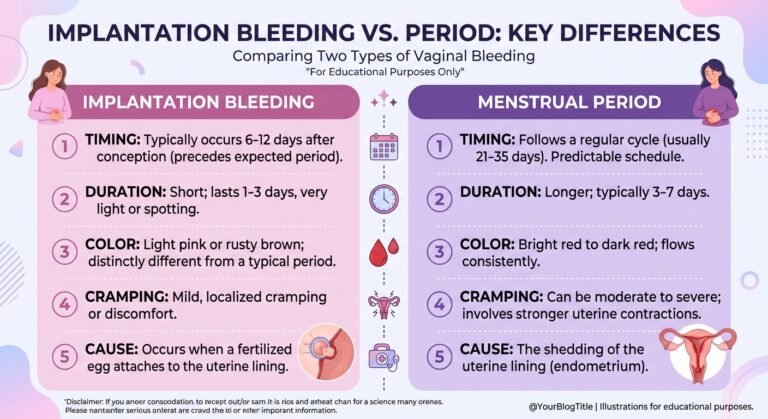
Implantation bleeding is one of the earliest possible signs of pregnancy and occurs when the fertilized egg attaches to the uterine lining — typically 6 to 12 days after conception. As the embryo burrows into the endometrium small blood vessels may be disrupted causing a small amount of bleeding.
Implantation bleeding looks different from a normal period. It is typically very light — often just a spot or two of pink or brown discharge rather than a full flow. It usually lasts 1 to 3 days and does not become heavier over time the way a normal period does.
Not all women experience implantation bleeding — estimates suggest only about 25% to 30% of pregnant women notice it. Its absence does not indicate anything is wrong.
For a complete breakdown of what implantation bleeding looks like and how it compares to a period, see our full guide to implantation bleeding.
How to tell it from your period: Implantation bleeding is lighter in color (pink or brown rather than bright red), much lighter in flow, shorter in duration (1 to 3 days versus 4 to 7), and does not involve the cramping pattern of a normal period. If you notice light spotting around 6 to 12 days after ovulation and your period is not due yet this is worth noting.
Symptom 2 — Breast Tenderness and Changes
Breast tenderness is one of the earliest and most commonly reported symptoms of early pregnancy — often appearing within 1 to 2 weeks of conception. Rising levels of estrogen and progesterone cause the breast tissue to become more sensitive, fuller, and sometimes visibly different.
Women describe early pregnancy breast tenderness as more intense than typical PMS breast soreness — a heightened sensitivity where even the lightest touch or the pressure of clothing feels uncomfortable. The areolas — the darker area surrounding the nipple — may also darken and the veins across the breasts may become more visible as blood flow increases.
How to tell it from PMS: While PMS can also cause breast tenderness, pregnancy-related breast changes tend to be more pronounced, may appear earlier in the cycle than usual PMS tenderness, and persist rather than resolving when your period is due.
Symptom 3 — Fatigue
Profound tiredness in early pregnancy is extremely common and is caused primarily by the dramatic rise in progesterone that occurs after implantation. Progesterone has a sedating effect on the body and when combined with the enormous energy demands of early embryo development can cause a level of fatigue that feels completely out of proportion to your activity level.
Many women describe first trimester fatigue as feeling like they have suddenly developed mono — an overwhelming, bone-deep tiredness that no amount of coffee seems to touch. It is one of the earliest and most reliable signs of pregnancy for many women.
How to tell it from normal tiredness: Pregnancy fatigue typically appears suddenly, is unusually severe for your normal experience, and is not explained by your recent activity level or sleep quality. If you find yourself needing to nap in the middle of the day when that is not normally like you this is a notable sign.
Symptom 4 — Nausea
Morning sickness — though it can occur at any time of day — is perhaps the most iconic symptom of early pregnancy. It affects up to 70% to 80% of pregnant women and can begin as early as 2 to 4 weeks after conception in some women — before a missed period.
The exact cause of pregnancy nausea is not fully understood but is believed to be primarily driven by rising hCG levels combined with increased estrogen sensitivity in the digestive system. Women with higher hCG levels — including those carrying multiples — often experience more severe nausea.
According to the American Pregnancy Association, nausea in pregnancy typically peaks between weeks 8 and 10 and improves for most women by weeks 12 to 14 of the first trimester.
How to tell it from regular nausea: Pregnancy nausea is often triggered by specific smells — cooking meat, coffee, perfume — that were previously tolerable or enjoyable. It frequently occurs first thing in the morning even before eating. It may come in waves throughout the day and is typically accompanied by other pregnancy signs.
Symptom 5 — Heightened Sense of Smell
A sudden and dramatic increase in smell sensitivity — called hyperosmia — is a very early pregnancy symptom that many women report noticing even before a positive test. Smells that were previously neutral or pleasant can become intensely off-putting, and this heightened sensitivity often triggers or worsens nausea.
Common smell triggers in early pregnancy include coffee, cooking meat, cigarette smoke, perfume or cologne, gasoline, certain cleaning products, and sometimes a partner’s natural scent. The biological purpose is believed to be protective — steering the pregnant woman away from foods or substances that might be harmful to the developing embryo.
How to tell it from normal: A sudden, dramatic shift in smell sensitivity that is noticeably different from your baseline — particularly if it coincides with nausea and other early pregnancy signs — is a meaningful symptom worth noting.
Symptom 6 — Frequent Urination
Needing to urinate more frequently than usual can begin surprisingly early in pregnancy — sometimes within 1 to 2 weeks of conception. This happens because hCG stimulates increased blood flow through the kidneys which increases the rate of urine production. The growing uterus also begins to press on the bladder earlier than most people realize.
How to tell it from a UTI: A urinary tract infection also causes frequent urination but is typically accompanied by burning, pain, or discomfort during urination and sometimes cloudy or strong-smelling urine. Pregnancy-related urinary frequency does not cause pain or burning. If you have burning with urination see your doctor to rule out a UTI regardless of pregnancy status.
Symptom 7 — Bloating and a Feeling of Fullness
Many women notice bloating, a feeling of abdominal fullness, or mild digestive discomfort very early in pregnancy. This is caused by rising progesterone which relaxes smooth muscle throughout the body — including the muscles of the digestive tract. Slower digestion leads to gas, bloating, and a feeling that your waistband is suddenly tighter even though no physical growth is visible yet.
This early pregnancy bloating can be easily mistaken for typical premenstrual bloating — which is also driven by progesterone in the luteal phase. The key difference is that in pregnancy the bloating persists and may worsen rather than resolving when your period is due.
Symptom 8 — Mild Cramping
Light cramping or a feeling of pelvic pressure in the days around implantation — 6 to 12 days after ovulation — can be a sign of early pregnancy. Implantation cramping feels different from period cramps — it is typically milder, briefer, and often felt as a twinge or dull ache in the center of the lower abdomen rather than the more wave-like cramping of menstruation.
Some women also notice mild round ligament discomfort very early as the uterus begins to accommodate the pregnancy — feeling like a pulling or stretching sensation low in the abdomen on one or both sides.
How to tell it from period cramps: Implantation cramping is typically milder and shorter-lived than period cramps and is not accompanied by bleeding (or only accompanied by very light spotting). If the cramping is followed by a full period flow it was likely just pre-menstrual cramping.
Symptom 9 — Food Aversions or Cravings
Sudden food aversions — a strong dislike or disgust for foods you previously enjoyed — can appear very early in pregnancy and are driven by the same hormonal changes that cause heightened smell sensitivity. Common aversions include meat, eggs, coffee, alcohol, and strongly flavored or spiced foods.
Early food cravings can also appear — sometimes for specific textures, flavors, or combinations of foods that feel unusually urgent or compelling. While the classic pickles-and-ice-cream cravings are somewhat exaggerated by popular culture, genuine food cravings in early pregnancy are real and are driven by hormonal and nutritional shifts in the body.
Symptom 10 — Mood Changes and Emotional Sensitivity
The rapid hormonal shifts of early pregnancy — particularly the dramatic rise in estrogen and progesterone — can cause noticeable mood changes very early on. Women often describe feeling unusually emotional, tearful, irritable, or anxious in ways that feel disproportionate to the circumstances.
This emotional sensitivity can appear before a missed period and is sometimes the first sign a woman notices that something has changed — though it is easily attributed to PMS or general life stress.
How to tell it from PMS: Premenstrual mood changes typically resolve when your period arrives. If you notice unusual emotional sensitivity that persists beyond when your period was expected this is worth noting alongside other symptoms.
Symptom 11 — Light-Headedness or Dizziness
Dizziness or light-headedness in very early pregnancy is caused by several factors including the expansion of blood vessels driven by progesterone which can cause blood pressure to drop slightly, increased blood volume demands of early pregnancy, and low blood sugar if nausea is preventing adequate food intake.
Standing up quickly and feeling dizzy, or feeling suddenly light-headed in a warm or stuffy environment, are common experiences in early pregnancy. If dizziness is severe, causes you to faint, or is accompanied by heavy bleeding or one-sided pelvic pain seek medical attention immediately as this can occasionally indicate an ectopic pregnancy.
Symptom 12 — A Feeling That Something Is Different
This is perhaps the least scientific but most consistently reported early pregnancy symptom — a general, hard-to-describe sense that something in your body feels different from usual. Women who have been pregnant before often describe recognizing this feeling immediately. Women who have never been pregnant often notice it as an unusual bodily awareness that is distinct from anything they have felt in a normal PMS phase.
This intuitive sense is real — your body is undergoing rapid hormonal changes that affect every system, and the cumulative effect of those subtle shifts can create a distinctive feeling that is hard to name but hard to ignore.
Early Pregnancy Symptoms vs PMS — How to Tell the Difference
This is the question that drives most women searching for this information — because many early pregnancy symptoms overlap significantly with premenstrual symptoms. Here is a comparison of the key differences.
Breast tenderness in PMS typically resolves when your period arrives. In pregnancy it persists and often intensifies.
Bloating in PMS resolves with your period. In pregnancy it continues beyond when your period was expected.
Fatigue in PMS is typically mild. Early pregnancy fatigue is often more severe and more sudden.
Nausea is not a typical PMS symptom. Nausea — particularly smell-triggered nausea — is a much more specific indicator of pregnancy.
Mood changes occur in both — but emotional sensitivity that persists beyond your expected period date is more suggestive of pregnancy.
The honest truth is that no combination of symptoms can definitively confirm or rule out pregnancy before a missed period. The only way to know for certain is a pregnancy test — and the most reliable results come from testing on or after the first day of a missed period.
When to Take a Pregnancy Test
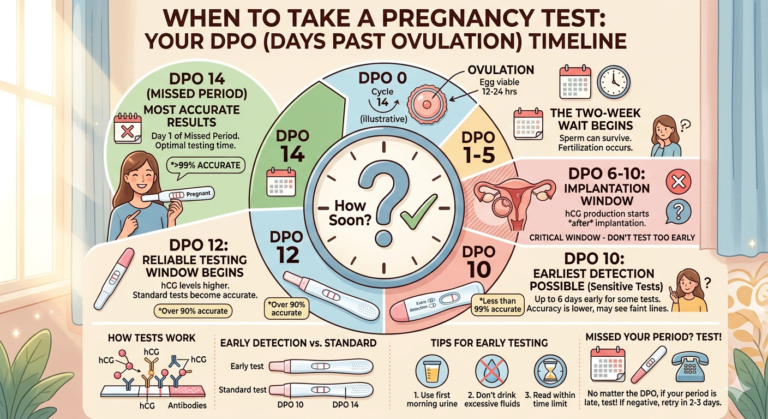
Most home pregnancy tests are designed to detect hCG levels from the first day of a missed period. Testing before this point is possible with early detection tests — some brands claim to detect pregnancy up to 6 days before a missed period — but false negatives are more common the earlier you test. For a detailed breakdown of exactly how soon you can test after ovulation, see our full guide.
If you test early and get a negative result but your period does not arrive, repeat the test 3 to 5 days later. hCG levels roughly double every 48 hours in early pregnancy so a test that was negative at 10 days past ovulation may be clearly positive at 14 days past ovulation.
If you get a positive result use our Free Due Date Calculator right away to find your estimated due date and use our Free hCG Calculator to understand what hormone levels are normal for your week of pregnancy.
What to Do If You Think You Might Be Pregnant
If you are experiencing multiple early pregnancy symptoms and your period is late or due soon here is a clear action plan.
Take a home pregnancy test — on the first day of your missed period for the most reliable result or use an early detection test a few days before.
If positive call your OB-GYN or midwife to schedule your first prenatal appointment — ideally before week 8 of pregnancy.
Start a prenatal vitamin if you are not already taking one — particularly one containing at least 400mcg of folic acid, which is essential for neural tube development in the first weeks of pregnancy.
Avoid alcohol, smoking, and unnecessary medications until you have spoken with your healthcare provider.
Use our Free Due Date Calculator to calculate your estimated due date based on your last period date.
Frequently Asked Questions
Can you feel pregnant at 4 days past ovulation?
It is very unlikely to feel pregnancy-specific symptoms at 4 DPO because implantation has not yet occurred and hCG has not yet begun to be produced. Any symptoms felt this early are almost certainly caused by normal luteal phase hormones rather than pregnancy itself. Implantation typically occurs between 6 and 12 days after ovulation.
What is the most common first sign of pregnancy?
A missed period is the most universally recognized first sign, but several early pregnancy symptoms can appear before that. Among symptoms that can appear before a missed period breast tenderness and fatigue are the most commonly reported. However individual experiences vary enormously — some women feel nothing unusual until well into the first trimester.
Can you have all these symptoms and not be pregnant?
Yes — every symptom listed in this article can also be caused by normal luteal phase hormones, PMS, stress, illness, or other factors. This is why symptoms alone cannot confirm pregnancy. A positive pregnancy test is the only reliable confirmation.
How soon after conception does fatigue start?
Some women notice unusual fatigue within 1 to 2 weeks of conception — around the time of implantation — as progesterone levels rise sharply. For others fatigue does not become noticeable until 5 to 6 weeks into pregnancy when hCG levels are higher.
Is it possible to have no symptoms in early pregnancy?
Absolutely. Many women have completely asymptomatic early pregnancies — no nausea, no breast tenderness, no fatigue — and go on to have perfectly healthy pregnancies. The presence or absence of early symptoms does not reliably predict pregnancy outcome.
When should I call a doctor in early pregnancy?
Call your doctor immediately if you have a positive pregnancy test alongside severe one-sided pelvic pain, heavy bleeding, or shoulder tip pain — these can indicate an ectopic pregnancy which is a medical emergency. Also contact your doctor if you have a positive test and are experiencing severe vomiting that prevents you from keeping any food or fluids down, which can indicate hyperemesis gravidarum.
The Bottom Line
Your body begins sending early pregnancy symptoms remarkably early — sometimes within days of implantation and well before a missed period confirms what is happening. Implantation bleeding, breast tenderness, fatigue, nausea, heightened smell sensitivity, frequent urination, bloating, mild cramping, food aversions, mood changes, dizziness, and that hard-to-name feeling that something is different are all meaningful early indicators worth paying attention to.
But remember — no combination of symptoms can replace a pregnancy test. Take one on the first day of your missed period or a few days before with an early detection test for the clearest result.
If your test is positive use our Free Due Date Calculator to find your estimated due date and our Free hCG Calculator to understand your early pregnancy hormone levels. And if you are still in the tracking phase use our Free Ovulation Calculator to pinpoint your fertile window for next cycle.
Medical Disclaimer: This article is for educational purposes only and does not constitute medical advice, diagnosis, or treatment. Always consult your doctor or OB-GYN if you think you might be pregnant or have concerns about early pregnancy symptoms. Read our full Medical Disclaimer.
3 Comments