Your First Period After Birth: What to Expect From Your Postpartum Cycle
INTRO
After the whirlwind of pregnancy and birth, the return of your menstrual cycle can feel disorienting in ways nobody really prepares you for. Maybe it arrives heavier than you remember, or lighter, or more painful, or simply at a time that catches you completely off guard. On top of the physical unfamiliarity, there’s often genuine confusion about what counts as your period in the first place versus normal postpartum bleeding, and what any of it means for your fertility going forward. In this article we’ll walk through exactly when your period typically returns, the crucial difference between postpartum bleeding and an actual period, what to expect from that first real period, how breastfeeding factors into all of this, and the one critical fact about ovulation that catches many new parents by surprise.
When Does Your Period Actually Return?
The honest answer is that it varies enormously depending on several factors, most significantly whether and how much you are breastfeeding.
If You Are Not Breastfeeding
For women who are not breastfeeding at all, periods typically return within 6 to 8 weeks postpartum, following a similar hormonal recovery timeline to the body’s natural cycle re-establishing itself after the dramatic hormonal shifts of pregnancy subside.
If You Are Exclusively Breastfeeding
Exclusive breastfeeding can delay the return of your period for months — sometimes for the entire duration of breastfeeding for some women. This happens because breastfeeding triggers elevated levels of prolactin, the hormone responsible for milk production, which in turn suppresses the release of GnRH, the hormone that kicks off the entire cascade leading to ovulation. The more frequently and exclusively you breastfeed, the more sustained this suppression tends to be.
If You Are Combination Feeding
For women who combine breastfeeding with formula feeding, or who breastfeed less frequently, the timeline falls somewhere in between the two extremes above and is highly individual. As feeding frequency decreases, prolactin levels typically drop, and the natural cycle tends to resume more quickly.
According to the American College of Obstetricians and Gynecologists, ovulation can return as early as 3 weeks after delivery even before the first period arrives, which is exactly why contraception planning matters early in the postpartum period regardless of feeding method.
Important: Lochia Is Not Your Period
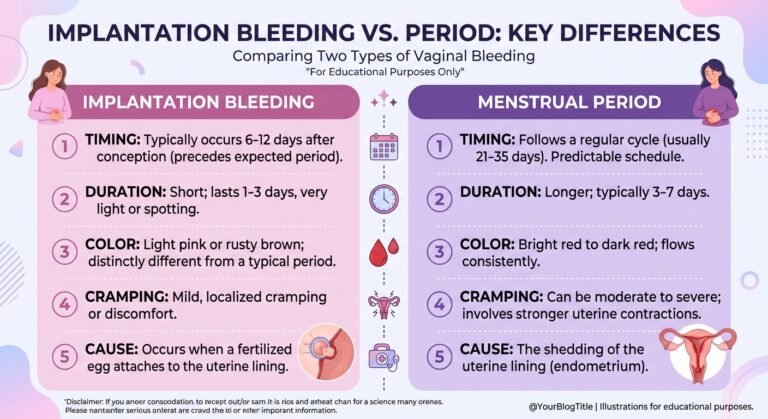
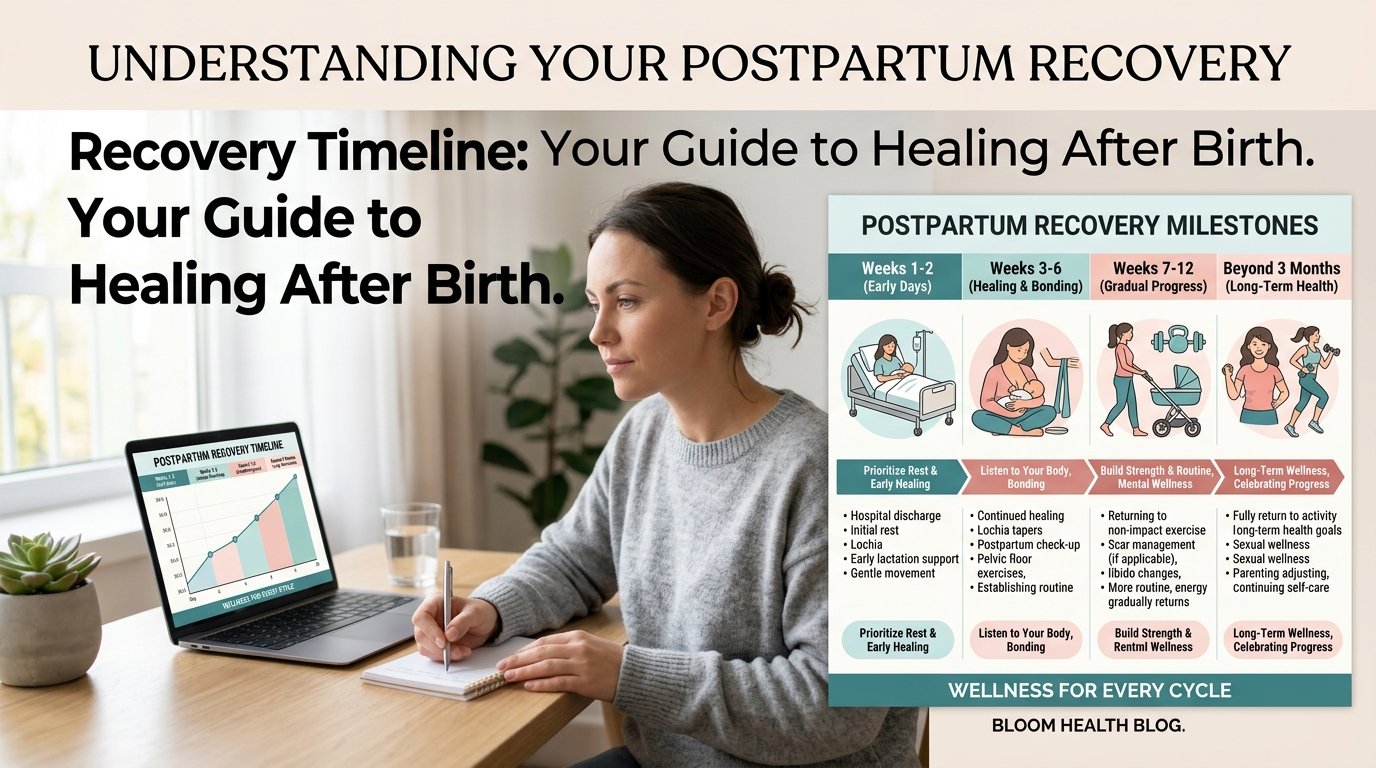
This is one of the most common points of confusion in the early postpartum weeks, so it’s worth addressing directly. The bleeding you experience in the first 4 to 6 weeks after birth is called lochia, and it is your body’s way of shedding the extra uterine lining and tissue built up during pregnancy. It is not a period, and its presence or absence tells you nothing about whether ovulation has resumed.
Lochia typically progresses through several stages — starting heavier and bright red in the first few days, gradually transitioning to a pinkish or brownish color, and finally tapering to a light yellowish-white discharge before stopping entirely, usually somewhere between 4 and 6 weeks postpartum, though this can vary.
If bleeding suddenly becomes heavier again after it has already started tapering off, or if you notice a foul odor, fever, or large clots, contact your doctor promptly, as this can sometimes indicate a postpartum complication that needs evaluation.
What to Expect From Your First Real Period
Once your true cycle does return, several things may feel different compared to your pre-pregnancy periods.
Heavier or longer flow. Many women find their first postpartum period is heavier or lasts longer than what they were used to before pregnancy, particularly if they had a vaginal delivery.
How long it typically lasts. Most women find their first postpartum period lasts somewhere in the typical pre-pregnancy range of 3 to 7 days, though it’s common for it to run a bit longer than what you were used to before, especially if the flow is also heavier. A first period lasting significantly longer than 7 days, or one that doesn’t taper off as expected, is worth mentioning to your doctor.
More cramping than before, or sometimes less. Some women report their cramps are notably worse after childbirth; others find them milder than before pregnancy. Both are commonly reported and considered within the range of normal.
Irregular cycle length for several months. Don’t be surprised if your first several postpartum cycles vary considerably in length as your hormones recalibrate fully. This irregularity typically smooths out within 3 to 6 months for most women.
Changes in PMS symptoms. Some women notice their premenstrual symptoms shift entirely after having a baby — either improving or worsening compared to before.
Track this transition with our Free Period Tracker so you have a clear, dated record to discuss with your doctor if anything seems concerning, and to help you understand your own new normal more quickly.
If irregularity persists beyond the first several months, our guide to causes of irregular periods covers what else could be contributing.
Important: You Can Ovulate Before Your First Period Arrives
This point deserves real emphasis because it surprises so many new parents and has direct practical implications. Ovulation can occur before your first postpartum period arrives, meaning it is entirely possible to conceive again before your cycle has visibly “returned” in the way most people assume signals fertility resuming.
This is true even for women who are breastfeeding, particularly as feeding frequency naturally decreases over time — for example, as a baby starts sleeping longer stretches at night or begins eating solid foods. The reduction in nursing frequency can be enough to allow ovulation to resume even while breastfeeding continues.
If you are not trying to conceive again right away, it is important to use reliable contraception starting well before you assume your cycle has returned, rather than waiting for a visible period as your cue. Discuss timing and options with your doctor at your postpartum checkup, since some contraceptive methods are more compatible with breastfeeding than others.
Once your cycle starts returning, our guide to tracking ovulation can help you identify your new fertile signs.
When to Contact Your Doctor
While a wide range of experiences fall within normal postpartum recovery, certain signs warrant a call to your doctor.
Bleeding that is heavy enough to soak through a pad in an hour or less, particularly if this happens repeatedly. Periods that have not returned within 6 months after stopping breastfeeding entirely (if not pregnant). Severe pain that significantly exceeds what you experienced before pregnancy. Any signs of infection, including fever or foul-smelling discharge.
Frequently Asked Questions
Is it normal for my first postpartum period to be very heavy?
Some increase in flow compared to your pre-pregnancy baseline is common and considered normal, but soaking through a regular pad hourly for several consecutive hours warrants a call to your doctor to rule out any complications.
Is this the same as my first period after stopping birth control?
Not quite — they’re related concepts but different scenarios. This article covers your cycle returning after childbirth specifically, driven by hormonal recovery and (if applicable) breastfeeding. If you’re instead asking about your cycle returning after stopping a birth control method — whether or not you’ve recently given birth — see the “What Happens When You Stop Birth Control” section of our birth control guide for that specific timeline.
Can I get pregnant while breastfeeding before my period returns?
Yes — ovulation can precede your first period after birth, meaning pregnancy is genuinely possible even if your cycle hasn’t visibly resumed yet. This is one of the most important and most frequently misunderstood facts about postpartum fertility.
How long can breastfeeding delay periods?
It varies widely between individuals. Some women resume their cycles within just a few months of giving birth despite breastfeeding, while others don’t see a return until breastfeeding significantly decreases in frequency or stops altogether, sometimes well over a year later.
Will my cycle ever go back to exactly how it was before pregnancy?
For most women, cycles do eventually return to a pattern similar to before pregnancy, though some women notice permanent changes in cycle length, flow, or symptom severity. This varies considerably from person to person.
Is it normal to skip periods after they’ve already returned?
Occasional irregularity is common in the months following the return of your cycle as hormones continue stabilizing. However, if periods stop again entirely for several months after having returned and you’re not pregnant, mention this to your doctor.
The Bottom Line
Your postpartum cycle is highly individual and influenced heavily by your feeding method, how your body specifically responds to the hormonal shifts of recovery, and simple individual variation. The most important takeaway is that ovulation can return before your period does, so contraception planning shouldn’t wait for a visible period as a signal. Once your cycles begin returning, use our Free Ovulation Calculator to start understanding your new normal, whether you’re hoping to avoid another pregnancy soon or are ready to start trying again.
Medical Disclaimer: This article is for educational purposes only and does not constitute medical advice, diagnosis, or treatment. Always consult your doctor or OB-GYN for personal health decisions. Read our full Medical Disclaimer.