11 Common Causes of Irregular Periods (And What to Do)
INTRO
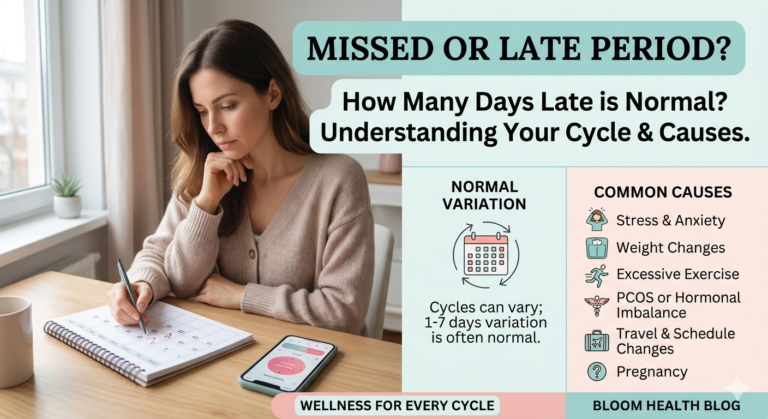
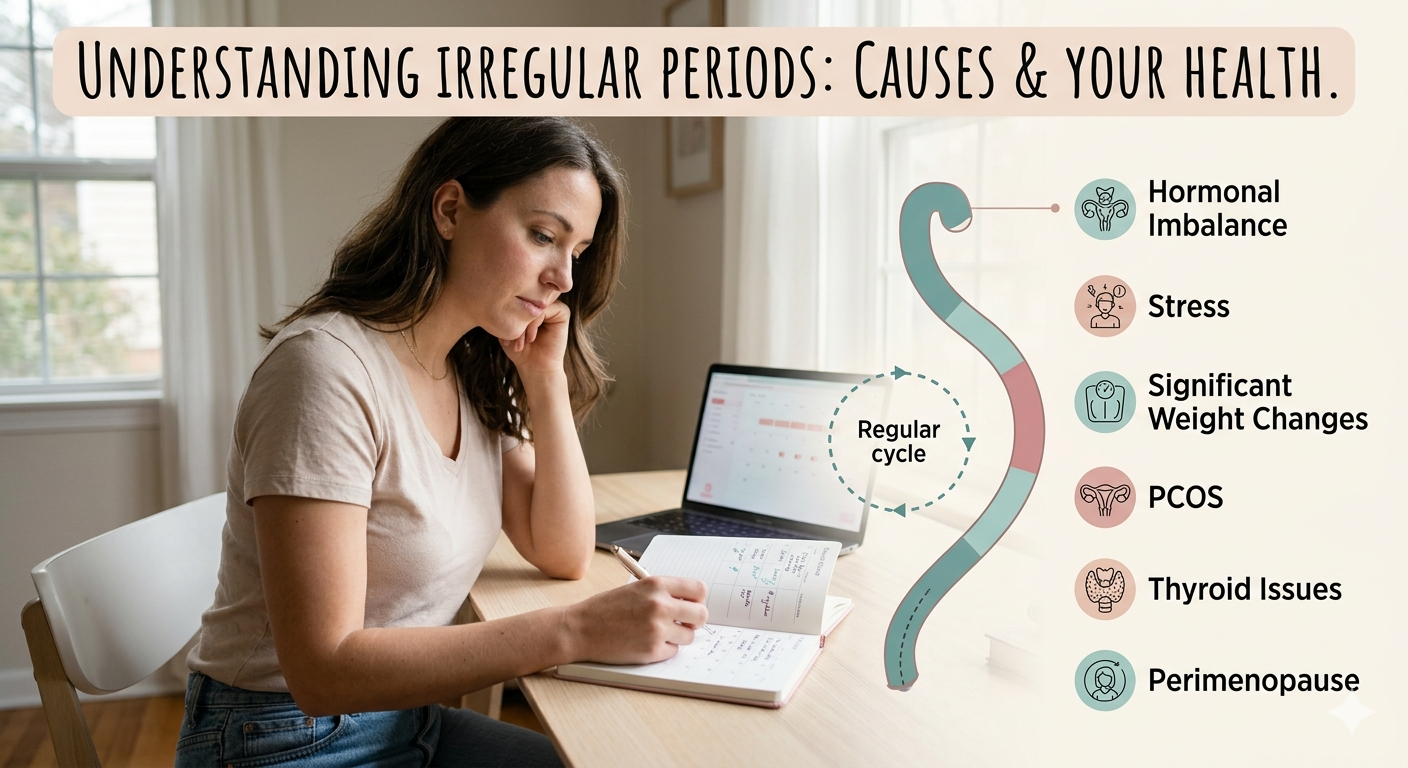
Irregular periods causes, If your period does not show up when you expect it — or shows up too early, too late, too light, too heavy, or not at all — you are dealing with what doctors call an irregular period. And you are far from alone. Irregular periods are one of the most common reasons women visit their OB-GYN, affecting millions of American women every year. The frustrating part is that irregular cycles can have many different causes — some completely harmless and temporary, others worth investigating with your doctor. In this article we are going to walk through the 11 most common causes of irregular periods, explain what is happening in your body with each one, and tell you exactly what you can do about it. By the end you will have a much clearer picture of why your cycle might be behaving the way it is — and what your next steps should be.
What Counts as an Irregular Period?
Before we dive into causes it helps to clarify what irregular actually means. A normal menstrual cycle lasts anywhere from 21 to 35 days and periods typically last 2 to 7 days. Flow can range from light to heavy and still be considered normal.
Your period is considered irregular if any of the following apply consistently over multiple cycles:
Your cycle length varies by more than 7 to 9 days from month to month — for example sometimes 24 days and sometimes 35 days.
Your period arrives fewer than 21 days or more than 35 days after the start of your previous period.
You miss 3 or more periods in a row without being pregnant.
Your bleeding is significantly heavier or lighter than usual.
You bleed between periods or after intercourse.
Track your cycle carefully with our Free Period Tracker to identify whether your cycle is genuinely irregular or simply varying within the normal range.
Cause 1 — Stress
Stress is the single most common cause of a temporarily irregular period — and it affects far more women than realize it. When you are under significant stress your body produces elevated levels of cortisol, the primary stress hormone. High cortisol can suppress the hormonal signals from the hypothalamus and pituitary gland that regulate your menstrual cycle — effectively telling your body that this is not the right time for reproduction.
The result can be a delayed period, a missed period, a lighter than usual flow, or a cycle that is significantly shorter or longer than normal. This can happen with emotional stress — a difficult relationship, work pressure, grief — or physical stress like illness, surgery, or extreme exercise.
What to do: If stress is the likely culprit the most effective approach is stress management — consistent sleep, moderate exercise, mindfulness practices, and addressing the underlying stressors where possible. Most women find their cycle returns to normal within one to two cycles once the stress is reduced. If your period is delayed by more than 3 weeks and pregnancy is possible take a pregnancy test first to rule that out.
Cause 2 — Polycystic Ovary Syndrome (PCOS)
PCOS is one of the most common hormonal disorders affecting women of reproductive age — estimated to affect between 1 in 10 and 1 in 8 American women. It is also one of the leading causes of chronically irregular periods.
With PCOS the ovaries produce higher than normal levels of androgens (male hormones) which disrupt the normal development and release of eggs. This leads to cycles that are unpredictably long — often 35 to 90 days or more — or periods that are missed entirely for months at a time. PCOS is also associated with small fluid-filled follicles on the ovaries, acne, excess facial or body hair, and difficulty losing weight.
According to the Office on Women’s Health, PCOS is a leading cause of female infertility and affects women of all races and ethnicities.
What to do: If you suspect PCOS see your doctor for a diagnosis — which typically involves blood tests for hormone levels and an ultrasound of the ovaries. Treatment depends on your goals and may include lifestyle changes, hormonal birth control to regulate cycles, or fertility treatments if you are trying to conceive.
Cause 3 — Thyroid Disorders
Your thyroid gland plays a surprisingly large role in regulating your menstrual cycle. Both an underactive thyroid (hypothyroidism) and an overactive thyroid (hyperthyroidism) can cause significant disruption to your periods.
Hypothyroidism — where the thyroid does not produce enough hormone — commonly causes heavier, more frequent, or more painful periods. It can also cause cycles to become longer and more irregular. Other symptoms include fatigue, weight gain, cold sensitivity, dry skin, and brain fog.
Hyperthyroidism — where the thyroid is overactive — tends to cause lighter, less frequent periods or missed periods. Other symptoms include weight loss despite normal eating, heart palpitations, anxiety, heat intolerance, and tremors.
What to do: Ask your doctor for a thyroid function blood test — specifically TSH, free T3, and free T4. Thyroid disorders are very treatable once diagnosed and most women see their cycles normalize within a few months of starting appropriate treatment.
Cause 4 — Significant Weight Changes
Your body weight has a direct relationship with your reproductive hormones. Both significant weight loss and significant weight gain can disrupt your cycle in different ways.
When body fat drops too low — whether through intentional dieting, an eating disorder, or extreme exercise — the body does not have enough stored energy to support a pregnancy. In response the hypothalamus reduces production of GnRH, the hormone that kicks off the entire hormonal cascade of your menstrual cycle. This can cause periods to become irregular or stop altogether — a condition called hypothalamic amenorrhea.
On the other end of the spectrum excess body fat — particularly around the abdomen — can cause the body to produce excess estrogen, disrupting the hormonal balance needed for regular ovulation and menstruation.
What to do: If rapid weight loss or a very low body weight is causing cycle disruption working with a doctor and potentially a registered dietitian to restore a healthy weight typically resolves the issue. If excess weight is the concern addressing this gradually through sustainable lifestyle changes and speaking with your doctor about underlying hormonal issues like insulin resistance can help regulate your cycle.
Cause 5 — Excessive Exercise
While moderate exercise is beneficial for hormonal health and cycle regularity, very high levels of physical training can disrupt your period significantly. This is particularly common in endurance athletes, competitive dancers, gymnasts, and women who dramatically increase their exercise intensity in a short period of time.
The mechanism is similar to weight loss — extreme exercise combined with the energy deficit it often creates signals to the hypothalamus that the body is under too much stress to support reproduction. The result is delayed or absent periods, lighter flow, or a shortened luteal phase.
What to do: Reducing exercise intensity and ensuring you are eating enough to support your activity level — not in a caloric deficit — typically allows the cycle to return to normal within a few months. Working with a sports dietitian can be particularly helpful for active women.
Cause 6 — Hormonal Birth Control
Starting, stopping, or changing hormonal contraception is one of the most common causes of temporarily irregular periods — and one of the most overlooked because women often do not connect the two.
When you stop taking hormonal birth control — whether the pill, patch, ring, or hormonal IUD — your natural cycle may take several months to re-establish itself. This is sometimes called post-pill amenorrhea — a temporary delay in the return of regular periods after stopping the pill. For most women periods return within 1 to 3 months, though for some it can take 6 months or longer.
Some forms of contraception — particularly the hormonal IUD (Mirena) and the contraceptive injection (Depo-Provera) — commonly cause periods to become very light or stop altogether while in use. This is expected and not harmful.
What to do: If your periods have not returned within 3 months of stopping hormonal birth control speak with your doctor. Track your cycle from the moment you stop using contraception with our Free Period Tracker so you have accurate data to share with your doctor if needed.
Cause 7 — Perimenopause
Perimenopause — the transitional phase leading up to menopause — typically begins in a woman’s mid to late 40s though it can start as early as the late 30s for some women. During perimenopause estrogen and progesterone levels begin to fluctuate unpredictably as the ovaries gradually reduce their hormone production.
These hormonal fluctuations cause cycles to become increasingly irregular — sometimes shorter, sometimes longer, sometimes skipped entirely. Flow may become heavier or lighter and unpredictable. Perimenopause lasts on average 4 to 8 years before menopause — defined as 12 consecutive months without a period — is reached.
Other symptoms of perimenopause include hot flashes, night sweats, sleep disruption, mood changes, vaginal dryness, and decreased libido.
What to do: If you are in your 40s and noticing increasing cycle irregularity speak with your doctor. A blood test measuring FSH and estradiol levels can help confirm whether perimenopause is the cause. There are effective treatments available for managing perimenopausal symptoms including hormone therapy, lifestyle adjustments, and non-hormonal options.
Cause 8 — Uterine Fibroids or Polyps
Uterine fibroids are noncancerous growths that develop in or on the uterus. Uterine polyps are small overgrowths of the uterine lining. Both are extremely common — fibroids affect up to 70% to 80% of women by age 50 — and both can significantly disrupt menstrual patterns.
Fibroids and polyps most commonly cause heavier than normal bleeding, longer periods, bleeding between periods, and pelvic pressure or pain. They can also cause cycles to feel irregular even if the timing remains consistent because of the unpredictable nature of the bleeding.
What to do: Fibroids and polyps are typically diagnosed via ultrasound or hysteroscopy. Many small fibroids and polyps do not require treatment. Larger ones or those causing significant symptoms may be treated with medication, minimally invasive procedures, or surgery depending on their size, location, and your symptoms.
Cause 9 — Endometriosis
Endometriosis is a condition in which tissue similar to the uterine lining grows outside the uterus — on the ovaries, fallopian tubes, or other pelvic organs. It affects an estimated 1 in 10 women of reproductive age and is notoriously underdiagnosed, with many women waiting years before receiving a correct diagnosis.
Endometriosis can cause irregular periods, very heavy bleeding, severe period pain, spotting between periods, painful intercourse, and fertility challenges. Because its symptoms overlap with many other conditions it is frequently mistaken for normal period pain or IBS.
What to do: If you have painful, heavy, or irregular periods alongside other symptoms of endometriosis see your OB-GYN. Diagnosis often requires laparoscopy — a minimally invasive surgical procedure. Treatment options range from pain management and hormonal therapy to surgery depending on severity and your reproductive goals.
Cause 10 — Elevated Prolactin (Hyperprolactinemia)
Prolactin is a hormone produced by the pituitary gland that triggers milk production after childbirth. Elevated prolactin levels outside of pregnancy and breastfeeding — a condition called hyperprolactinemia — can suppress the hormonal signals needed for regular ovulation and menstruation.
Hyperprolactinemia can cause irregular or absent periods, milky discharge from the nipples when not breastfeeding, headaches, and vision changes. It is most commonly caused by a small benign tumor on the pituitary gland called a prolactinoma — which sounds alarming but is typically very treatable.
What to do: A blood test measuring your prolactin levels can identify this quickly. If levels are elevated your doctor may order an MRI of the pituitary gland. Medication — specifically dopamine agonists like cabergoline — is highly effective at normalizing prolactin levels and restoring regular cycles.
Cause 11 — Undiagnosed Pregnancy or Early Pregnancy Loss
This one is worth mentioning because it is sometimes overlooked. An irregular or missed period is the most classic early sign of pregnancy — and some women experience what seems like a light period when they are actually experiencing very early pregnancy spotting or implantation bleeding.
Similarly early pregnancy loss — a miscarriage in the first few weeks, sometimes before a woman even knows she was pregnant — can cause what appears to be a late, heavier than usual, or irregular period.
What to do: If your period is late or significantly different from normal and there is any possibility of pregnancy take a pregnancy test. This is always the first step before investigating other causes of a missed or irregular period. If you get a positive test use our Free Due Date Calculator to estimate your due date right away.
When to See a Doctor About Irregular Periods
Some cycle variation is completely normal. But you should make an appointment with your doctor if any of the following apply.
You have missed 3 or more periods in a row and are not pregnant.
Your cycles are consistently shorter than 21 days or longer than 35 days.
Your period is significantly heavier than usual — soaking through a pad or tampon every hour for several hours.
You have severe pelvic pain with your period.
You are trying to conceive and have been unsuccessful for 6 months or longer.
You are 35 or older and have been trying to conceive for 3 months or longer without success.
You notice bleeding between periods or after intercourse consistently.
How to Track Irregular Periods Effectively
If you have irregular periods the most useful thing you can do right now is start tracking your cycle in detail. The more information you have the easier it is for your doctor to identify patterns and potential causes.
Log the first day of each period, how long it lasts, the flow level, any pain or symptoms, and any days of spotting between periods. Our Free Period Tracker makes this simple — and the data you collect over 3 to 6 months gives your doctor exactly what they need to make an informed assessment.
If you are also trying to identify your fertile window despite irregular cycles our Free Ovulation Calculator can give you an estimated ovulation date to work from — which you can then refine with OPK testing and cervical mucus monitoring.
Frequently Asked Questions
Is it normal for periods to be irregular in your 20s?
Some irregularity in your late teens and early 20s is normal as your hormonal system matures and establishes its rhythm. However if you are in your mid 20s or older and your periods are consistently irregular it is worth investigating rather than assuming it is just normal variation.
Can diet cause irregular periods?
Yes — particularly very low calorie diets, very low carbohydrate diets, or diets that result in rapid weight loss can disrupt the hormonal balance needed for regular ovulation. Nutritional deficiencies — particularly in iron, zinc, and B vitamins — can also contribute to cycle irregularity.
How many days late is considered an irregular period?
A period that arrives up to 7 days later than expected in any given cycle is generally considered within the range of normal variation. If your period is more than 7 days late it is worth taking a pregnancy test and if negative monitoring the situation. If it does not arrive within 35 days of the start of your last period contact your doctor.
Can irregular periods affect fertility?
Yes — irregular periods often indicate irregular or absent ovulation, which directly affects the ability to conceive. However many causes of irregular periods are treatable and fertility can often be restored with the right intervention. If you are TTC with irregular cycles see a doctor sooner rather than later rather than waiting the standard 12 months.
Can irregular periods become regular on their own?
Sometimes yes — particularly if the cause is temporary, like stress, illness, or a recent change in contraception. But chronic irregularity caused by conditions like PCOS, thyroid disorders, or endometriosis typically requires medical treatment to resolve. Tracking your cycle carefully over several months helps you determine whether your irregularity is improving on its own or requires attention.
Does being on the pill make periods regular?
Hormonal birth control — particularly the combined oral contraceptive pill — typically produces very regular withdrawal bleeds. However this is not the same as a natural regular cycle. When you stop the pill your underlying cycle pattern returns — which may or may not be regular depending on your hormonal health.
The Bottom Line
Irregular periods are incredibly common but they are not something you have to simply accept without understanding why they are happening. From stress and PCOS to thyroid disorders and perimenopause, there are 11 well-recognized causes — most of them diagnosable and treatable once identified.
The first step is to start tracking. Use our Free Period Tracker to log your cycles in detail over the next 3 to 6 months. The patterns you identify will be invaluable — both for your own understanding and for any conversation you have with your doctor.
If you are also concerned about fertility and ovulation use our Free Ovulation Calculator to estimate your fertile window based on your current cycle data — and see your doctor if you have been trying to conceive for more than 3 to 6 months without success.
Medical Disclaimer: This article is for educational purposes only and does not constitute medical advice, diagnosis, or treatment. Always consult your doctor, OB-GYN, or qualified healthcare provider for personal health decisions. Read our full Medical Disclaimer.