
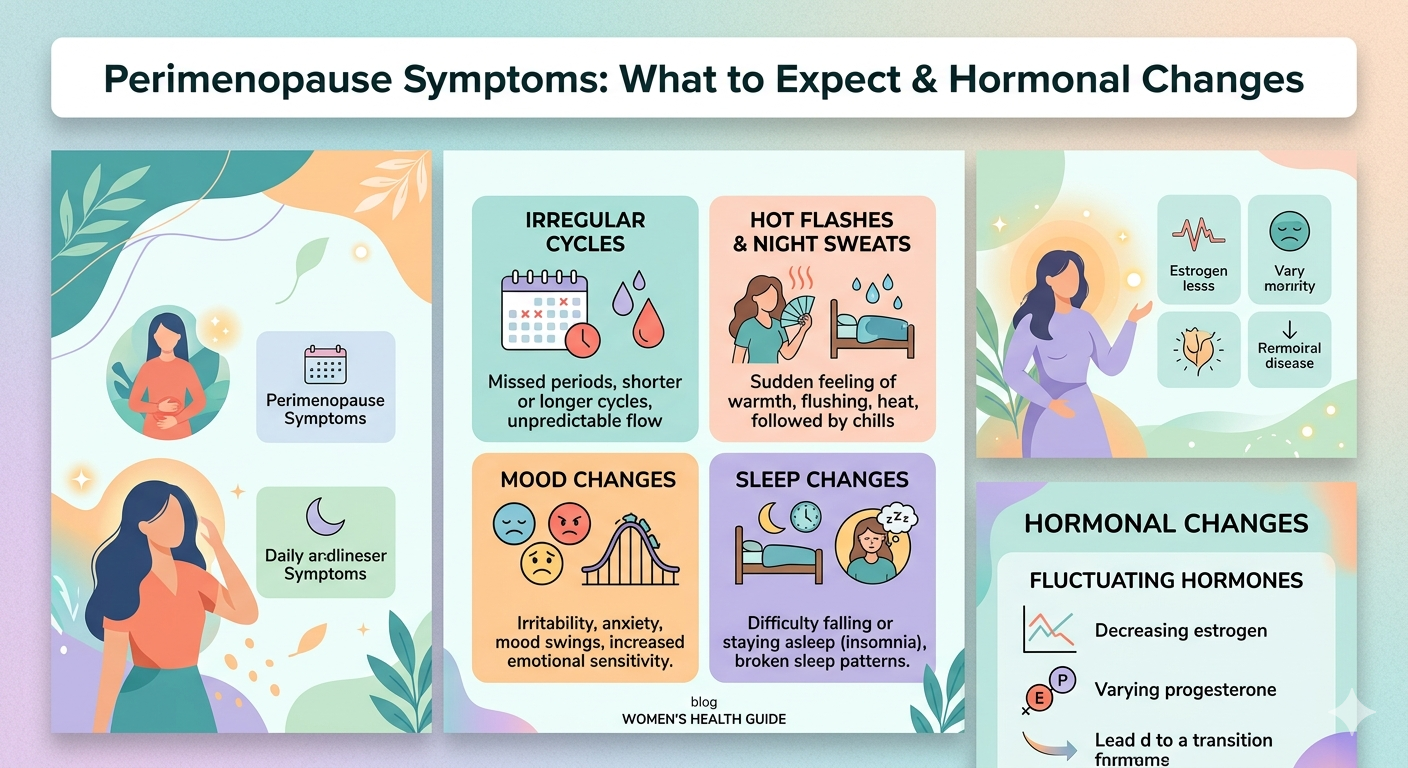
Perimenopause Symptoms: What to Expect and When They Start
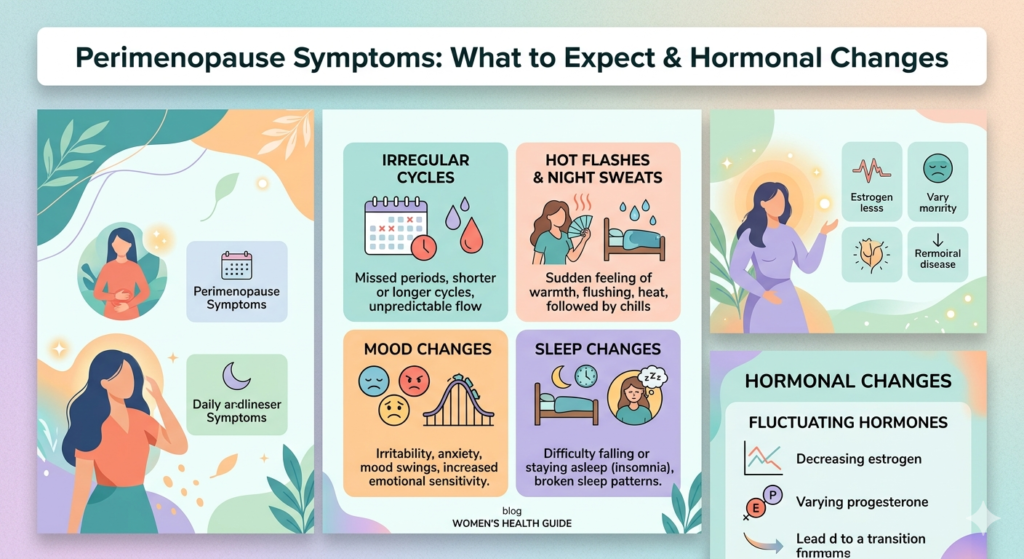
INTRO
Perimenopause is one of the most significant hormonal transitions of a woman’s life — and one of the least talked about. Many women enter their late 30s or 40s noticing changes in their cycles, their sleep, their mood, and their bodies without realizing that perimenopause has already begun. The symptoms can be subtle at first and are frequently dismissed as stress, aging, or simply having a bad few months. But understanding what perimenopause is, when it typically starts, what symptoms to expect, and how to manage them effectively can make an enormous difference to how you experience this transition. In this article we are going to cover everything you need to know about perimenopause symptoms — from the earliest signs to the most challenging ones — and give you a clear picture of what this phase of your reproductive life actually looks like.
What Is Perimenopause?
Perimenopause — sometimes called the menopausal transition — is the period of hormonal change that precedes menopause. It begins when the ovaries start to gradually reduce their production of estrogen and progesterone and ends when menopause is reached — defined as 12 consecutive months without a menstrual period.
During perimenopause ovarian function becomes increasingly unpredictable. Hormone levels — particularly estrogen — fluctuate dramatically rather than declining in a smooth, linear pattern. It is these fluctuations rather than a simple decline that drive the majority of perimenopausal symptoms. Some months estrogen surges higher than normal. Others it drops sharply. This rollercoaster of hormonal variability creates a wide range of physical and emotional symptoms that can feel confusing and unpredictable.
According to the North American Menopause Society, perimenopause typically lasts between 4 and 8 years though it can range from just a few months to more than 10 years. The average age at menopause in the United States is 51 — meaning perimenopause typically begins somewhere in the mid to late 40s for most women though it can start as early as the late 30s.
When Age Does Perimenopause Start?
The most common age for perimenopause to begin is the mid-40s — typically between 44 and 46 for most women. However perimenopause can begin as early as the late 30s for some women — a phenomenon sometimes called early perimenopause — and as late as the early 50s for others.
Several factors influence when perimenopause begins.
Genetics — the age at which your mother and maternal female relatives reached menopause is one of the strongest predictors of when you will. If your mother experienced early menopause you are at higher risk of the same.
Smoking — women who smoke reach menopause on average 1 to 2 years earlier than non-smokers.
Chemotherapy or radiation to the pelvic area — these treatments can trigger early menopause.
Surgical removal of the ovaries — bilateral oophorectomy causes immediate surgical menopause regardless of age.
Body weight — very low body weight has been associated with earlier onset of perimenopause in some studies.
The earliest and most reliable sign that perimenopause has begun is a change in your menstrual cycle — specifically cycles becoming shorter, longer, or more irregular than they have been throughout your reproductive years. Track your cycle consistently with our Free Period Tracker so you have a clear baseline and can identify when changes begin.
Perimenopause Symptom 1 — Irregular Periods
Changes to the menstrual cycle are the hallmark of perimenopause and are typically the first noticeable sign that the transition has begun. These changes can take many different forms.
Shorter cycles — many women notice their cycles becoming shorter in early perimenopause — shrinking from a typical 28 to 30 days down to 21 to 24 days. This happens because the follicular phase — the first half of the cycle — shortens as ovarian reserve declines.
Longer or skipped cycles — as perimenopause progresses cycles can begin to lengthen significantly — stretching to 35, 45, 60 days or more — as ovulation becomes increasingly infrequent. Some cycles may occur without ovulation (anovulatory cycles) resulting in a period that still arrives but without the hormonal progression of a normal ovulatory cycle.
Heavier periods — fluctuating estrogen levels in perimenopause can cause the uterine lining to become thicker than usual leading to unusually heavy or prolonged periods. This is common in early to mid perimenopause before cycles become more widely spaced.
Lighter periods — as ovarian function further declines periods often become lighter and less frequent before stopping altogether at menopause.
Spotting between periods — irregular spotting or bleeding between periods can occur in perimenopause but should always be evaluated by a doctor to rule out other causes including uterine polyps, fibroids, or endometrial changes.
Perimenopause Symptom 2 — Hot Flashes
Hot flashes are the most universally recognized symptom of perimenopause and affect approximately 75% to 85% of women during the menopausal transition. A hot flash is a sudden sensation of intense heat — typically starting in the chest and spreading upward to the neck and face — often accompanied by flushing of the skin, sweating, and a rapid heartbeat. They typically last 1 to 5 minutes and can range from mildly uncomfortable to intensely disruptive.
Hot flashes are caused by declining estrogen levels affecting the hypothalamus — the brain region that regulates body temperature. The hypothalamus becomes hypersensitive to small changes in core body temperature and triggers an inappropriate heat-dissipation response — essentially a false alarm that causes the blood vessels in the skin to dilate rapidly to release heat.
Hot flashes can begin in perimenopause — sometimes years before menopause is reached — and typically continue for several years after. The median duration of hot flashes from onset to resolution is approximately 7 to 10 years though some women experience them for much shorter or much longer periods.
Perimenopause Symptom 3 — Night Sweats
Night sweats are essentially hot flashes that occur during sleep — and they are one of the most functionally disruptive symptoms of perimenopause because they directly impair sleep quality. A night sweat typically involves waking drenched in perspiration — sometimes requiring a change of clothing or bedding — followed by a chill as the body overcorrects its temperature regulation.
The sleep disruption caused by night sweats compounds many other perimenopausal symptoms including fatigue, cognitive difficulties, and mood changes. Women who experience frequent night sweats often describe a level of sleep deprivation comparable to having a newborn.
Strategies that help manage night sweats include keeping the bedroom cool (between 60°F and 67°F is often recommended), using moisture-wicking bedding and sleepwear, keeping a fan or cold pack accessible at the bedside, avoiding alcohol and spicy foods in the evening, and wearing loose breathable layers to bed.
Perimenopause Symptom 4 — Sleep Disturbances
Sleep problems in perimenopause go beyond just night sweats. Many perimenopausal women experience difficulty falling asleep, frequent waking during the night, and early morning awakening even on nights when hot flashes and night sweats are not the primary cause.
Declining progesterone — which has natural sleep-promoting properties — is believed to contribute to insomnia in perimenopause independent of hot flashes. Changes in melatonin production and circadian rhythm regulation also occur during the menopausal transition and may further disrupt sleep architecture.
Chronic sleep disruption in perimenopause has downstream effects on virtually every aspect of health and wellbeing — including cognitive function, mood, cardiovascular health, metabolic function, and immune system performance. Addressing sleep problems in perimenopause is therefore not a minor quality-of-life issue but an important health priority.
Perimenopause Symptom 5 — Mood Changes
Mood changes — including irritability, anxiety, low mood, tearfulness, and in some women clinical depression — are common in perimenopause and are directly related to the hormonal fluctuations of this transition phase.
Estrogen plays an important role in regulating serotonin, dopamine, and other neurotransmitters involved in mood regulation. The erratic fluctuations of estrogen during perimenopause — rather than a simple decline — create unpredictable shifts in neurotransmitter activity that many women experience as emotional instability, heightened anxiety, or low mood.
Research has found that the risk of developing a major depressive episode is approximately 2 to 3 times higher during perimenopause than in the premenopausal years — even in women with no prior history of depression. This is not simply a psychological response to aging or life circumstances — it is a hormonally driven neurological change.
If you are experiencing significant mood changes during perimenopause speak with your doctor. Effective treatments are available including hormone therapy, antidepressants, and psychological support.
Perimenopause Symptom 6 — Cognitive Changes (Brain Fog)
Many perimenopausal women report difficulty concentrating, memory lapses, word-finding difficulties, and a general sense of mental fogginess — colloquially known as brain fog. This is one of the most alarming symptoms for women who have never experienced cognitive difficulties before and it is frequently a source of significant anxiety.
Estrogen supports cognitive function through multiple mechanisms — it promotes blood flow to the brain, supports the growth and maintenance of neurons, and influences the activity of several neurotransmitter systems involved in memory and concentration. When estrogen levels fluctuate dramatically during perimenopause these cognitive support functions become inconsistent.
The cognitive changes of perimenopause are real but importantly they are typically temporary — most women find that cognitive function improves after the transition to menopause when hormone levels stabilize at their new lower baseline.
Perimenopause Symptom 7 — Vaginal Dryness and Discomfort
As estrogen levels decline the tissues of the vagina, vulva, and urinary tract undergo changes collectively termed genitourinary syndrome of menopause (GSM). Declining estrogen causes the vaginal walls to become thinner, less elastic, and less well-lubricated — leading to vaginal dryness, irritation, burning, and discomfort during intercourse.
Unlike hot flashes and mood changes which often improve after menopause GSM tends to worsen progressively over time without treatment. It is estimated to affect up to 50% to 60% of postmenopausal women but only a small percentage seek treatment — often because they are embarrassed to discuss it or not aware that effective treatments exist.
Treatment options include vaginal moisturizers used regularly, lubricants used during intercourse, and low-dose vaginal estrogen which is highly effective, minimally absorbed into the bloodstream, and considered safe for most women including those who cannot use systemic hormone therapy.
Perimenopause Symptom 8 — Changes in Libido
Many women notice a change in sexual desire during perimenopause — most commonly a decrease in libido though some women experience a temporary increase. Declining testosterone (women also produce testosterone in smaller amounts and it contributes to libido), vaginal dryness that makes intercourse uncomfortable, sleep deprivation, mood changes, and the psychological stress of navigating the menopausal transition all contribute to changes in sexual interest.
Reduced libido in perimenopause is extremely common and is a legitimate medical concern — not simply a normal part of aging to be accepted without question. Effective treatments exist including testosterone therapy, addressing vaginal dryness, improving sleep, and managing mood symptoms.
Perimenopause Symptom 9 — Bone Density Changes
Estrogen plays a critical role in maintaining bone density by inhibiting the activity of osteoclasts — the cells that break down bone tissue. As estrogen levels decline during perimenopause bone loss accelerates — increasing the risk of osteopenia and eventually osteoporosis.
Bone loss during the perimenopausal transition and early postmenopausal years is faster than at any other point in a woman’s life — averaging approximately 2% to 3% per year in the years immediately surrounding menopause. This accelerated bone loss phase slows after menopause but the bone density lost during this window is difficult to regain.
Proactive measures to protect bone density during perimenopause include adequate calcium intake (1,000 to 1,200mg per day), vitamin D3 supplementation, weight-bearing exercise, resistance training, and — where appropriate — discussion with your doctor about hormone therapy or other bone-protective medications.
Perimenopause Symptom 10 — Weight Changes
Many women notice that weight management becomes more difficult during perimenopause — gaining weight more easily, particularly around the abdomen, even without significant changes in diet or exercise. This is driven by several intersecting factors.
Declining estrogen promotes a redistribution of body fat from the hips and thighs (the female fat distribution pattern) toward the abdomen (the metabolically more dangerous visceral fat pattern). Declining muscle mass with age reduces metabolic rate. Insulin sensitivity also declines with the hormonal changes of perimenopause.
The most effective strategies for managing perimenopausal weight changes include maintaining or increasing resistance training to preserve muscle mass, prioritizing protein intake to support muscle preservation, focusing on low-glycemic whole foods to manage insulin sensitivity, and maintaining regular moderate aerobic exercise.
Lesser-Known Perimenopause Symptoms
Beyond the symptoms above, several less commonly discussed changes are also linked to perimenopause’s hormonal fluctuations.
Nausea: Some women experience intermittent nausea during perimenopause, thought to be related to the same hormonal fluctuations that can cause nausea at other points in the reproductive cycle. It’s typically mild and comes and goes rather than being constant.
Itchy or crawling skin sensations: Declining estrogen affects skin collagen and moisture, which some women experience as itchiness, tingling, or an unusual “crawling” sensation under the skin.
Burning mouth or altered taste: Less commonly, hormonal changes can affect oral tissue and taste perception, causing a burning sensation or changes in how food tastes.
Worsening ADHD symptoms: Emerging research suggests that women with existing ADHD may notice their symptoms intensify during perimenopause, likely related to estrogen’s role in supporting the same cognitive functions discussed in the brain fog section above. This is a newer area of research, so if you notice this pattern, it’s worth raising with your doctor specifically.
How Is Perimenopause Diagnosed?
Perimenopause is primarily a clinical diagnosis — based on your age, symptoms, and menstrual history — rather than a laboratory diagnosis. There is no single definitive blood test that confirms perimenopause.
FSH (follicle-stimulating hormone) levels are often measured and rising FSH levels can support a perimenopause diagnosis — but FSH fluctuates significantly during the transition and a single normal FSH result does not rule out perimenopause. Estradiol levels and AMH (anti-Mullerian hormone) testing can provide additional context.
A doctor who suspects perimenopause will typically take a detailed menstrual history — which is why tracking your cycle carefully with our Free Period Tracker before your appointment is genuinely valuable. Noting when your cycles started changing, by how much, and what other symptoms appeared around the same time gives your doctor the clearest possible picture.
Treatment and Management Options
The good news about perimenopause is that effective treatment options exist for virtually all of its significant symptoms. You do not have to simply endure the transition — effective management is available.
Hormone Therapy (HT)
Hormone therapy — previously called hormone replacement therapy or HRT — is the most effective treatment for moderate to severe perimenopausal symptoms including hot flashes, night sweats, sleep disturbances, mood changes, vaginal dryness, and bone loss. Modern hormone therapy comes in multiple forms including pills, patches, gels, sprays, and vaginal rings, and can be tailored to individual health profiles.
The decision to use hormone therapy should be made in consultation with your doctor based on your individual symptom severity, health history, and risk factors. For most healthy women under 60 who are within 10 years of menopause onset the benefits of hormone therapy outweigh the risks.
Non-Hormonal Medications
For women who cannot or prefer not to use hormone therapy several non-hormonal medications have evidence for managing specific perimenopausal symptoms. These include SSRIs and SNRIs for hot flashes and mood symptoms, gabapentin for hot flashes and sleep, and ospemifene for vaginal dryness.
Lifestyle Approaches
Lifestyle modifications can significantly reduce the severity of many perimenopausal symptoms. Regular aerobic and resistance exercise reduces hot flash frequency, supports mood, protects bone density, and helps with weight management. A diet rich in phytoestrogens (soy, flaxseeds, legumes) may have mild estrogen-like effects. Stress management through mindfulness, yoga, or therapy supports mood and sleep. Limiting alcohol and caffeine reduces hot flash triggers.
Perimenopause and Fertility — Can You Still Get Pregnant?
Yes — and this surprises many women. Fertility declines significantly during perimenopause but ovulation can still occur unpredictably until menopause is confirmed (12 consecutive months without a period). Women in perimenopause can and do get pregnant — sometimes unexpectedly.
If you do not wish to become pregnant use contraception consistently throughout perimenopause until menopause is confirmed. If you are hoping to conceive in perimenopause seek fertility evaluation promptly as ovarian reserve is declining and time is a significant factor. Use our Free Ovulation Calculator to estimate when ovulation might be occurring in cycles where your period is still present.
Ovulation signs can still occur but become less predictable — our guide to ovulation symptoms covers what to watch for.
Frequently Asked Questions
What is the difference between perimenopause and menopause?
Perimenopause is the transitional phase leading up to menopause during which hormone levels fluctuate and menstrual cycles become irregular. Menopause is a specific point in time — defined as 12 consecutive months without a menstrual period. After that point a woman is considered postmenopausal. Most of the symptoms associated with the menopausal transition actually occur during perimenopause rather than after menopause.
Can perimenopause start at 35?
Yes — though early perimenopause beginning before 40 is less common, affecting approximately 10% of women. Perimenopause beginning in the late 30s to early 40s is more common than most people realize. If you are under 40 and experiencing symptoms suggestive of perimenopause speak with your doctor — premature ovarian insufficiency (POI) and other conditions that require prompt evaluation can present similarly.
For a full breakdown of what can cause cycle changes at any age, see our guide to irregular period causes.
How long do perimenopausal symptoms last?
The duration of perimenopause varies widely — from as little as a few months to more than 10 years with an average of 4 to 8 years. Individual symptoms vary in duration within that period. Hot flashes on average begin during perimenopause and persist for a median of 7 to 10 years from onset — often continuing well into the postmenopausal years.
Does perimenopause cause weight gain?
Perimenopause is associated with changes in fat distribution and increased difficulty with weight management — particularly increased abdominal fat — driven by declining estrogen and changes in insulin sensitivity. However significant weight gain is not inevitable and can be substantially mitigated with appropriate exercise (particularly resistance training) and dietary strategies. The weight changes of perimenopause are driven by hormonal shifts rather than simply aging or lifestyle changes.
Is it normal to have anxiety during perimenopause?
Yes — anxiety is a very common perimenopausal symptom and is directly related to the hormonal fluctuations of the transition. Estrogen influences serotonin and GABA signaling in the brain — both of which are involved in anxiety regulation. Erratic estrogen fluctuations during perimenopause can create a neurological environment that is more prone to anxious responses. If anxiety is significantly affecting your daily life speak with your doctor — effective treatments are available.
Can I track my cycle during perimenopause?
Absolutely — and tracking is particularly valuable during perimenopause because your cycle changes are meaningful health data. Use our Free Period Tracker to log every cycle — noting start date, duration, flow, and any symptoms. This data helps your doctor assess where you are in the perimenopausal transition and is useful for identifying any concerning changes like very heavy bleeding or intermenstrual spotting that warrant further evaluation.
How do I know if I’m in perimenopause after a hysterectomy (with ovaries intact)?
If you’ve had a hysterectomy but kept your ovaries, you won’t have periods to track — but your ovaries still age and go through perimenopause on their own natural timeline. Since the cycle-based signal isn’t available to you, watch instead for the other symptoms covered in this article — hot flashes, night sweats, sleep changes, mood shifts, and vaginal dryness — as your main indicators. Your doctor can also check FSH and estradiol levels for additional context, though as noted above, hormone testing alone isn’t a definitive diagnosis for anyone.
Is there an accurate perimenopause symptom checker or quiz online?
Be cautious of online quizzes that claim to diagnose perimenopause — there’s no validated self-assessment tool that can confirm it, since perimenopause is a clinical diagnosis based on your age, symptom pattern, and menstrual history over time, best assessed with your doctor rather than a standalone quiz.
The Bottom Line
Perimenopause is a significant hormonal transition that can begin years before menopause and bring a wide range of physical and emotional symptoms — from irregular periods and hot flashes to mood changes, cognitive shifts, and changes in sexual health. Understanding what to expect, recognizing the symptoms when they arrive, and knowing that effective treatment is available for virtually all of them puts you in a fundamentally better position to navigate this transition on your own terms.
Start by tracking your cycle carefully with our Free Period Tracker — the changes in your menstrual pattern are often the earliest and most reliable signal that the perimenopausal transition has begun. Bring that data to your doctor alongside a detailed symptom history for the most informed and productive conversation about your options.
And if you are still in your reproductive years and want to understand your cycle more deeply use our Free Ovulation Calculator and our Free Period Tracker to build the kind of detailed cycle knowledge that will serve you well through every phase of your reproductive life.
Medical Disclaimer: This article is for educational purposes only and does not constitute medical advice, diagnosis, or treatment. Always consult your doctor or a qualified healthcare provider about perimenopause symptoms and management options. Read our full Medical Disclaimer.
One Comment