
How to Chart Basal Body Temperature (BBT): A Beginner’s Step-by-Step Guide
INTRO
Basal body temperature charting is one of the oldest and most reliable at-home methods for confirming ovulation, and it costs less than $15 to get started — no apps, subscriptions, or complicated equipment required. Despite being a simple practice, getting accurate, useful results depends on a handful of small details that are easy to get wrong when you’re just starting out. In this guide we’ll walk through exactly what BBT is, what you need to begin, the precise step-by-step process for taking and recording your temperature correctly, the most common mistakes beginners make, and how to actually read your chart once you have a few weeks of data.
What Is Basal Body Temperature?
Your basal body temperature is your body’s resting temperature, measured at the absolute lowest point of your daily cycle — immediately upon waking, before any movement, talking, eating, or even checking your phone. This is different from a regular temperature reading taken at any point during the day, which is influenced by activity, digestion, and time elapsed since waking.
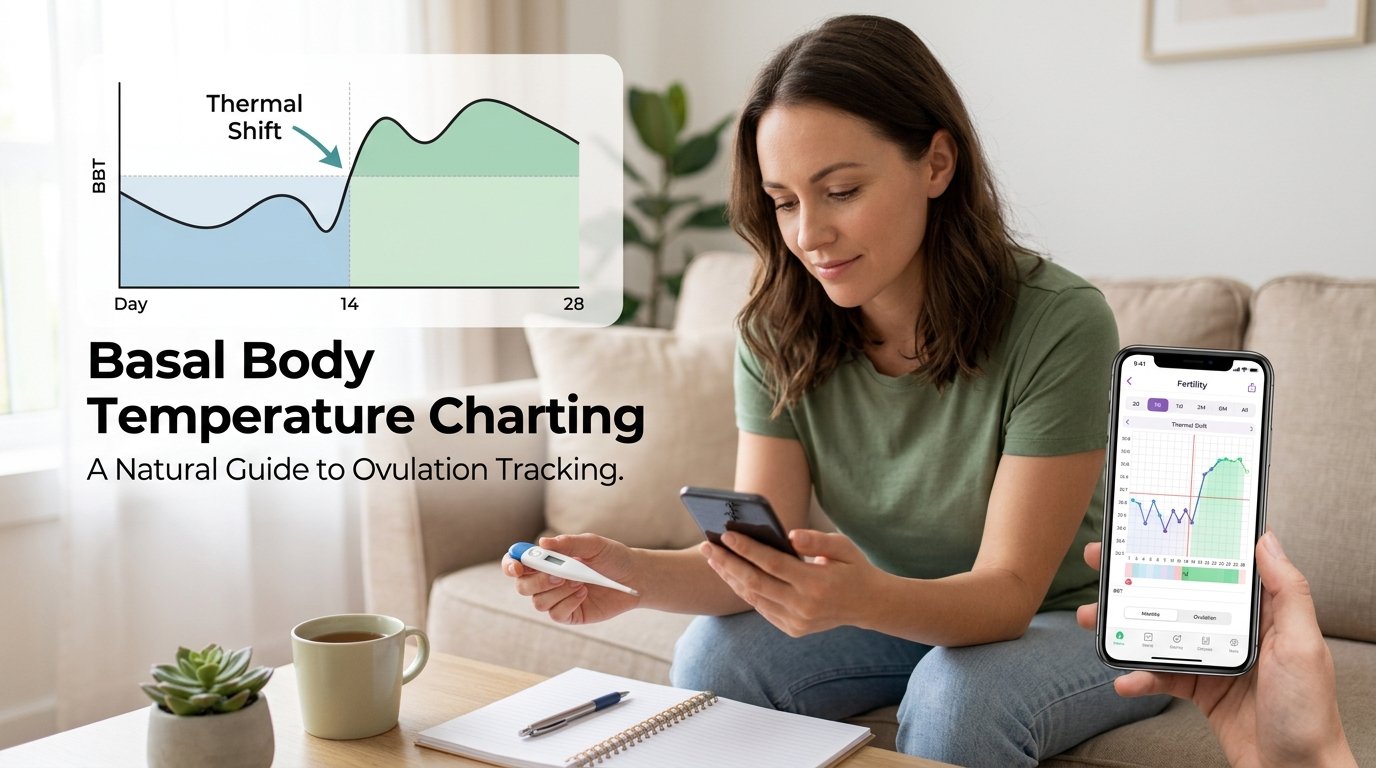
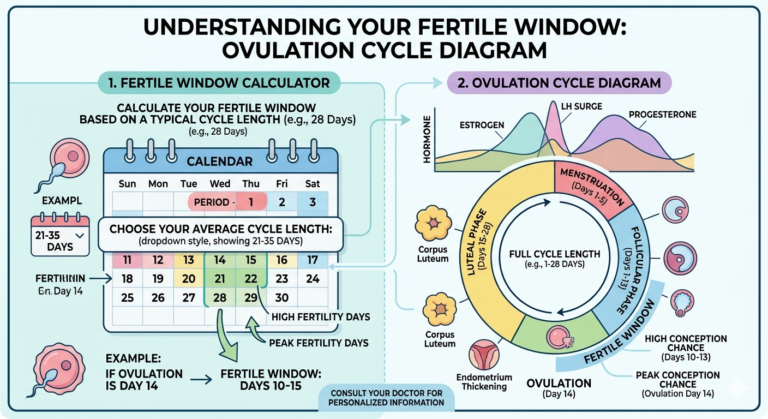
The reason BBT charting works for tracking ovulation comes down to hormones. Before ovulation, your BBT typically sits in a lower baseline range. After ovulation occurs, rising progesterone causes a small but measurable increase — typically 0.2°F to 0.5°F — that stays elevated until your next period begins, assuming no pregnancy has occurred.
According to the Mayo Clinic, basal body temperature charting is a recognized fertility awareness method that can help identify the post-ovulatory phase of the cycle when used consistently over time, though it works best as part of a broader fertility tracking approach rather than as a standalone tool.
What You Need to Get Started
The barrier to entry for BBT charting is genuinely low, which is part of what makes it such an accessible method.
A Basal Thermometer
This is non-negotiable — a standard household thermometer is not precise enough for this purpose. A basal thermometer measures to two decimal places (for example, 97.62°F rather than just 97.6°F), which is necessary because the temperature shift you’re looking for is so small. Basal thermometers typically cost between $10 and $20 and are widely available online and at most pharmacies.
A Tracking Method
A simple notebook works perfectly well, though many women prefer a dedicated app or spreadsheet that automatically plots the numbers into a visual chart, making patterns easier to spot at a glance.
Consistency in Routine
More than any piece of equipment, what BBT charting really requires is a consistent daily habit, which is often the hardest part for beginners to maintain in the first week or two.
Step-by-Step Instructions for Charting Your BBT
Follow these steps every single morning for the most accurate and useful results.
Step 1 — Take your temperature at the same time every morning. Aim for consistency within a 30-minute window — for example, always between 6:30am and 7:00am. Significant variation in timing from day to day can introduce inaccuracies into your readings.
Step 2 — Take it before getting out of bed. This means before sitting up, before reaching for your phone, before talking, and ideally before opening your eyes fully. Any movement raises your metabolic rate slightly and can skew the reading.
Step 3 — Make sure you’ve had at least 3 consecutive hours of sleep beforehand. A reading taken after a fragmented or very short sleep period is less reliable, since your body hasn’t had sufficient rest to reach its true resting temperature.
Step 4 — Record the number immediately. Don’t rely on memory, even for a few minutes — write it down or log it in your app right away, since basal thermometers don’t always retain the previous reading clearly once removed.
Step 5 — Plot it on your chart daily, without skipping days when possible. Missing days creates gaps that make the overall pattern harder to interpret, though an occasional missed day won’t ruin your data entirely.
Step 6 — Look for the pattern after 2 to 3 full cycles. A clear pattern typically emerges showing lower temperatures in the first half of your cycle (the follicular phase) followed by a sustained rise after ovulation (the luteal phase) that persists until your next period.
Combine your BBT pattern with our Free Ovulation Calculator to cross-check your estimated ovulation date against what your chart actually shows — over time, this combination helps you understand your personal cycle far more precisely than either method alone.
How to Read Your BBT Chart
Once you have a few weeks of data, here’s what to look for.
The biphasic pattern. A healthy ovulatory cycle typically shows two distinct temperature levels — a lower phase before ovulation and a higher phase after — with a visible shift between the two, often called the thermal shift.
Confirming ovulation has occurred. Generally, three consecutive days of higher temperatures above your pre-ovulation average confirms that ovulation has likely already occurred in that cycle.
A pattern that doesn’t shift. If your chart stays relatively flat without any clear rise across an entire cycle, this can sometimes indicate that ovulation did not occur in that particular cycle, which is worth discussing with your doctor if it happens repeatedly.
BBT During Early Pregnancy: The Implantation Dip and What a “Pregnant” Chart Looks Like
If you’re in the two-week wait, you may find yourself scrutinizing every small wiggle in your chart for a sign of pregnancy. Two patterns come up often: the “implantation dip” and a sustained temperature rise. It’s worth understanding what each one actually tells you — and what it doesn’t.
What Is an Implantation Dip?
An implantation dip refers to a one-day drop in BBT — typically around 0.2°F to 0.5°F — that some women notice around 7 to 10 days after ovulation, roughly the window when implantation occurs. The temperature then returns to its elevated level the following day.
Here’s the important context: research suggests only about 20% to 30% of pregnant women actually show this pattern on their chart. Its absence does not mean anything is wrong, and plenty of healthy pregnancies never show a dip at all. It can also occasionally appear in cycles that don’t result in pregnancy, so on its own it’s a “maybe” sign at best — not a reliable way to confirm or rule out pregnancy.
What Actually Distinguishes a “Pregnant” BBT Chart
A more meaningful signal than the dip is how long your elevated temperatures last. In a typical non-pregnant cycle, your temperature stays elevated for about 12 to 16 days after ovulation (your luteal phase), then drops as your period begins. In a pregnancy, rising progesterone keeps supporting the uterine lining, so temperatures tend to remain elevated well past your usual luteal phase length instead of dropping — sometimes described as a “triphasic” pattern, since the chart shows three temperature levels (pre-ovulation, post-ovulation, and a further rise) rather than the usual two.
If your temperature stays elevated for longer than your normal luteal phase typically runs, and your period doesn’t arrive when expected, that combination is a more meaningful signal worth taking a pregnancy test over than a single-day dip earlier in the cycle.
According to Healthline, BBT patterns can offer helpful clues but should never replace an actual pregnancy test for confirmation — a chart can suggest a pattern worth watching, but only a test (or your doctor) can confirm pregnancy.
Common Mistakes Beginners Make
Several easily avoidable errors can undermine the usefulness of your BBT data, particularly in the first few cycles of charting.
Taking your temperature at inconsistent times from day to day, which introduces noise that makes the underlying pattern harder to identify.
Getting out of bed before measuring, even briefly, which elevates your metabolic rate and produces an inaccurately high reading.
Drinking alcohol the night before, which can cause temporary temperature spikes unrelated to your actual hormonal pattern.
Sleeping poorly or for a very short duration, which similarly skews readings in unpredictable ways.
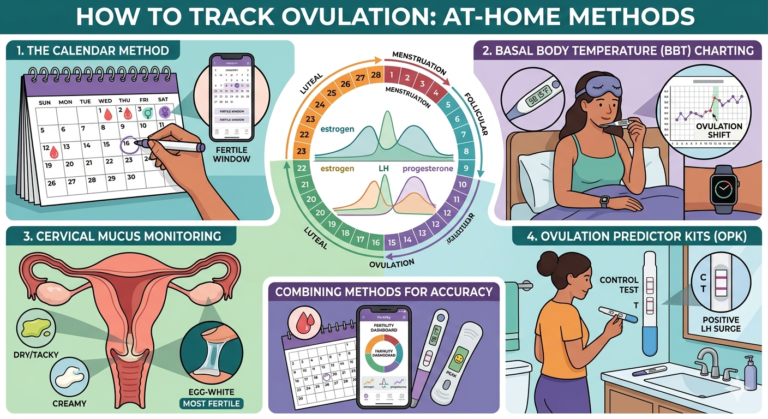
Expecting BBT to predict ovulation in real time. This is perhaps the most important misconception to correct — BBT confirms that ovulation has already happened; it does not give you advance warning the way an OPK test or cervical mucus changes can. For predicting ovulation before it occurs, BBT works best paired with other real-time tracking methods.
Frequently Asked Questions
How long until I see a clear pattern?
Most women need 2 to 3 full cycles of consistent charting before a clear, reliable pattern emerges. Don’t be discouraged if your first cycle’s data looks messy or inconclusive — this is completely normal while you’re still establishing your baseline.
Can illness affect my BBT readings?
Yes, fever, infections, poor sleep, and alcohol consumption can all cause temporary spikes or fluctuations that are unrelated to ovulation. If you’re sick during a tracking cycle, it’s worth noting this on your chart so you can account for it when reviewing your data later.
Is BBT charting enough on its own to track fertility?
It’s most powerful when combined with OPK testing and cervical mucus monitoring for real-time fertile window tracking, since BBT alone only confirms ovulation after the fact rather than predicting it in advance.
What time of day should I take my temperature?
Choose a time that aligns with when you typically wake up, and stick to it as closely as possible every single day, including weekends, for the most reliable and comparable readings.
Do I need an expensive thermometer?
No — a basic basal thermometer in the $10 to $20 range is perfectly sufficient. The key feature you need is two-decimal-place precision, not any particular brand or additional smart features.
The Bottom Line
Paragraph block:
BBT charting is simple, inexpensive, and genuinely useful once you build a few months of consistent data — it gives you a window into your own unique cycle pattern that few other free methods can match. Use our Free Period Tracker alongside your temperature chart to track your full cycle picture in one place, making it easier to spot patterns across cycle length, period timing, and ovulation all together.
Medical Disclaimer: This article is for educational purposes only and does not constitute medical advice, diagnosis, or treatment. Always consult your doctor or OB-GYN for personal health decisions. Read our full Medical Disclaimer.
One Comment