How Long Does Ovulation Last? Everything You Need to Know
INTRO
How long does ovulation last? It is one of the most commonly searched questions in women’s health — and the answer surprises a lot of people. The actual moment of ovulation is incredibly brief. But the window of opportunity it creates for conception is longer than most women realize. Understanding the difference between how long ovulation itself lasts versus how long your fertile window lasts is one of the most important things you can learn when it comes to understanding your cycle. In this article we are going to break it all down clearly — the biology of ovulation timing, the lifespan of the egg, how long your fertile window stays open, and exactly how to use this knowledge to your advantage whether you are trying to conceive or simply want to understand your body better.
How Long Does Ovulation Last? (And How Long Does the Egg Survive?)
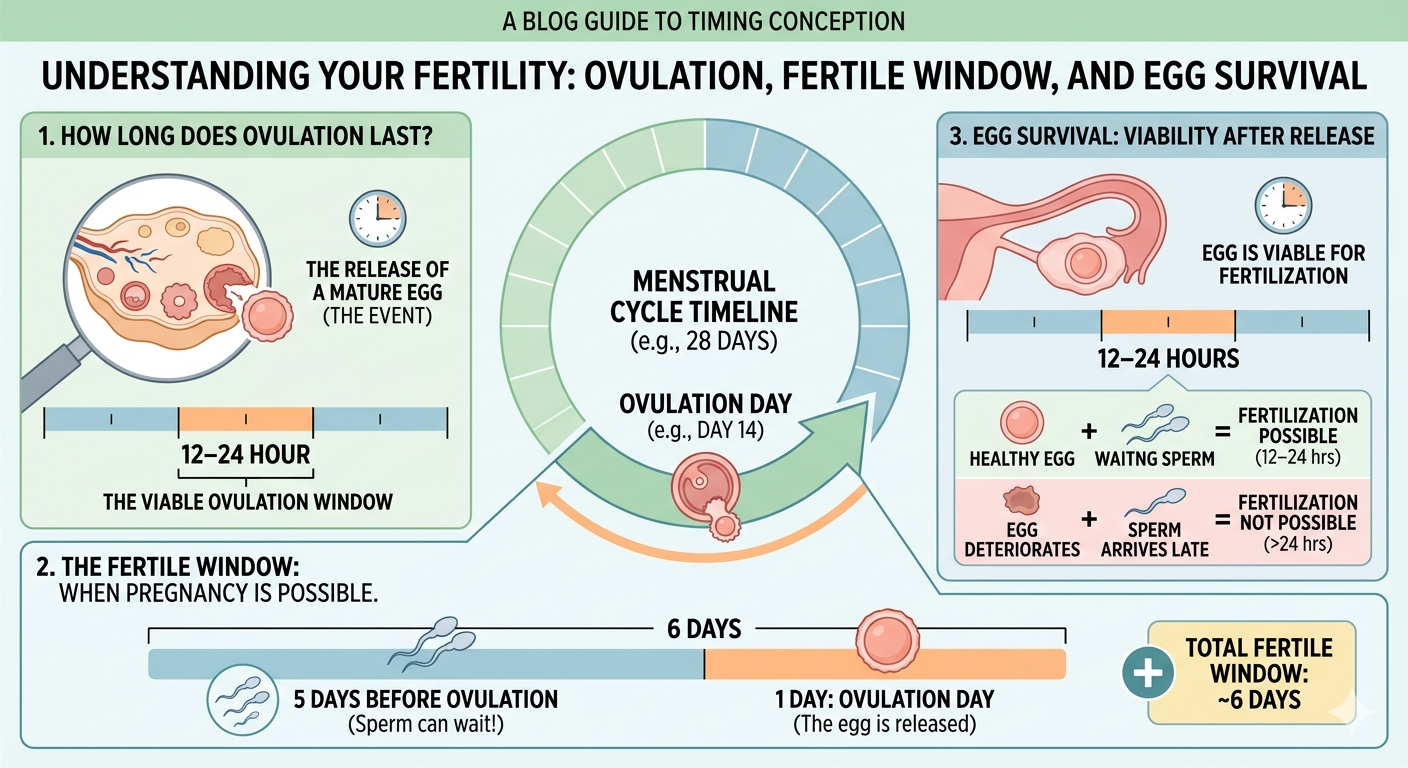
Ovulation itself — the moment when the dominant follicle in your ovary ruptures and releases a mature egg — is not a prolonged event. The rupture and release of the egg happens over a period of just a few minutes to a few hours.
Once released the egg travels from the ovary into the fallopian tube where fertilization can occur. The egg remains viable — capable of being fertilized — for only 12 to 24 hours after it is released.
After that window the egg begins to dissolve and is absorbed by the body. If it has not been fertilized the luteal phase continues, progesterone eventually drops, and your next period begins approximately 12 to 16 days later.
So if you are asking how long ovulation lasts in terms of the egg’s viability, the honest answer is: less than a day. This is why so many women feel pressured to time everything perfectly — and why understanding your broader fertile window is so much more useful than trying to pinpoint the exact moment of ovulation.
How Long Is the Fertile Window?
Here is the part that changes everything for most women learning about their cycle for the first time.
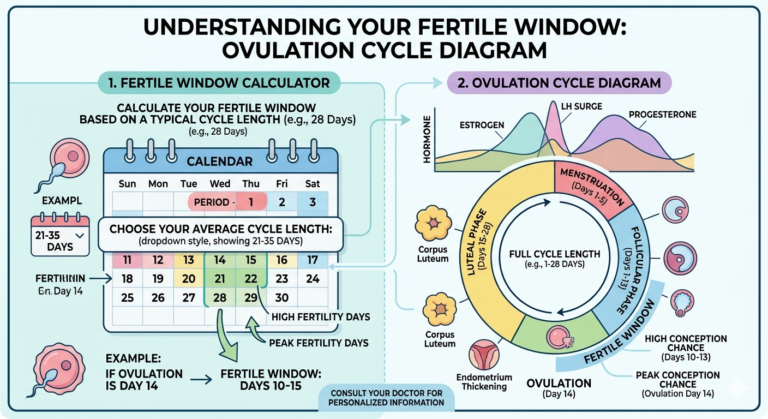
Even though the egg only survives for 12 to 24 hours after ovulation, your fertile window is approximately 6 days long. This is because sperm are remarkably resilient — they can survive inside the female reproductive tract for up to 5 days when fertile cervical mucus is present to nourish and protect them.
This means that intercourse in the 5 days before ovulation can still result in pregnancy — because the sperm can wait inside the fallopian tube for the egg to arrive. Add the day of ovulation itself and you get a 6-day window of potential fertility each cycle.
Use our Free Ovulation Calculator to find exactly when your fertile window opens and closes based on your personal cycle length.
Learn more in our guide to finding your fertile window.
The Best Days to Conceive Within the Fertile Window
When it comes to the most fertile days to get pregnant, not all 6 days in the fertile window carry equal chances of conception. Research has consistently shown that the 2 to 3 days immediately before ovulation are the most fertile days of your cycle — often more so than ovulation day itself.
Here is why: by the time ovulation occurs the egg has already been released and the clock is ticking on its 12 to 24 hour survival window. Sperm that are already waiting in the fallopian tube when the egg arrives have the best chance of fertilizing it. This is why having intercourse in the days leading up to ovulation — rather than scrambling to time it for the exact moment — is actually the most effective approach.
According to research highlighted by the National Library of Medicine, the day before ovulation carries the highest probability of conception — approximately 31% per cycle — while ovulation day itself carries a lower probability of around 10% to 15%.
The practical takeaway: start having intercourse 3 to 4 days before your expected ovulation date and continue through ovulation day. This approach covers your peak fertile days without the stress of trying to hit a single precise moment.
Does Ovulation Last the Same Amount of Time Every Month?
The physical process of ovulation — the follicle rupturing and releasing the egg — is consistently brief regardless of the cycle. What changes month to month is not how long ovulation lasts but when it happens.
Ovulation timing can shift by several days from cycle to cycle in the same woman. Factors that can push ovulation earlier or later include stress, illness, significant changes in sleep patterns, travel across time zones, changes in exercise intensity, and changes in body weight.
This variability is one of the most important reasons to track your cycle actively rather than simply assuming ovulation happens on the same day every month. Even a woman with a very regular 28-day cycle may ovulate anywhere from day 12 to day 16 depending on what is happening in her life that month.
Our Free Period Tracker can help you log your cycles over time and identify patterns in your ovulation timing across multiple months.
How to Know When Ovulation Is Happening
Since ovulation itself is so brief the key is identifying the signs that ovulation is approaching — so you can take action before the egg is released rather than after.
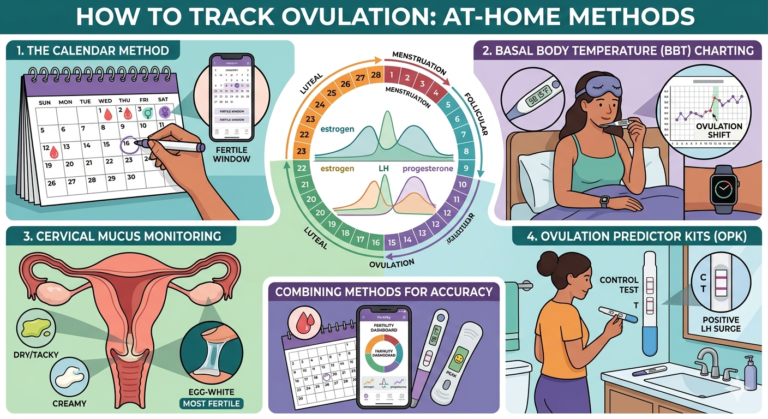
Cervical Mucus Changes
In the days leading up to ovulation your cervical mucus becomes increasingly clear, wet, and stretchy — resembling raw egg whites. This is called egg-white cervical mucus (EWCM) and it is one of the most reliable real-time signs that ovulation is imminent. The presence of EWCM means your body is preparing for the egg’s release and creating a hospitable environment for sperm.
Positive OPK Test
An ovulation predictor kit (OPK) detects the surge in luteinizing hormone (LH) that triggers ovulation. A positive OPK result means ovulation is typically 24 to 36 hours away — giving you the advance notice you need to time intercourse during your most fertile days.
Ovulation Pain
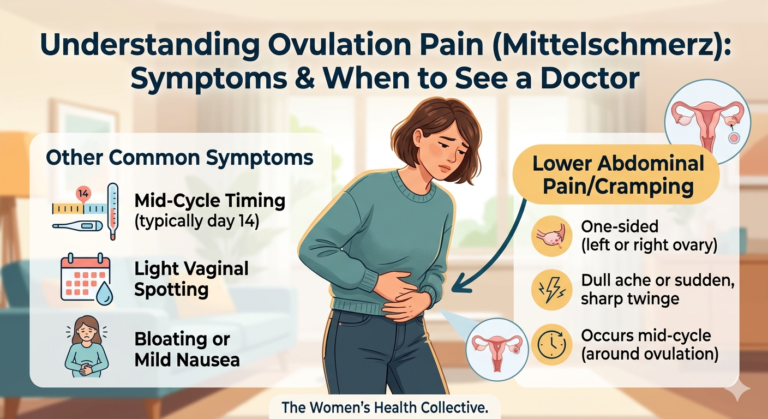
Some women feel a brief twinge or dull ache on one side of their lower abdomen around the time the follicle ruptures — this is called mittelschmerz. While it is not precise enough to use as a sole tracking method it can serve as a useful additional confirmation that ovulation is occurring or has just occurred.
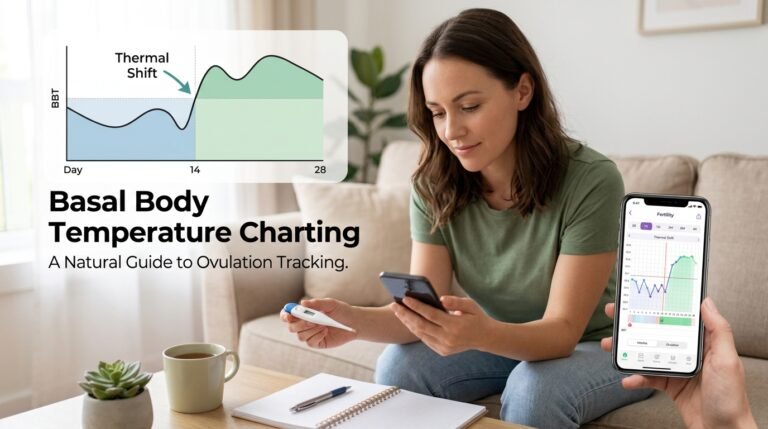
Basal Body Temperature Rise
After ovulation the hormone progesterone causes a small but measurable rise in your basal body temperature — typically 0.2°F to 0.5°F above your pre-ovulation baseline. This rise confirms that ovulation has already happened. Because it is a retrospective sign BBT is most useful for identifying your ovulation pattern over several cycles rather than predicting ovulation within a single cycle.
Using the Ovulation Calculator
The simplest starting point is to use our Free Ovulation Calculator — enter your last period date and average cycle length and it estimates your ovulation date and fertile window in seconds. Combine this estimate with real-time tracking methods for the most accurate picture.
How Long After Ovulation Can You Get Pregnant?
Technically the egg can only be fertilized within 12 to 24 hours of its release. After that the opportunity for conception in that cycle is gone.
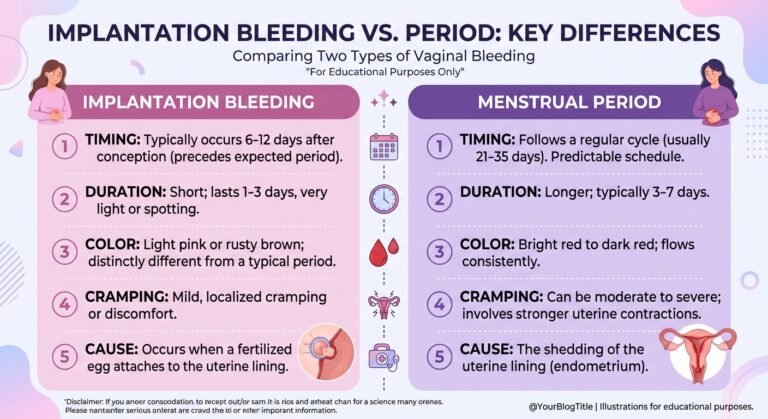
However here is something important to understand: a positive pregnancy test does not appear until after implantation, which happens 6 to 12 days after fertilization. So even though conception occurs within 24 hours of ovulation you will not know about it for at least another week — sometimes longer.
If you are tracking your cycle and wondering whether you might be pregnant after your fertile window use our Free Due Date Calculator to estimate your due date once you have a positive test.
Can You Ovulate Twice in One Cycle?
This is a question that comes up often — and the answer is nuanced.
Multiple eggs can be released during a single ovulation event — but this happens within a 24-hour window, not across separate occasions during the cycle. This is how fraternal twins are conceived — two eggs released at approximately the same time are fertilized by two separate sperm.
What does not happen is a second separate ovulation event days or weeks after the first one in the same cycle. Once ovulation has occurred and progesterone rises it suppresses further ovulation for the remainder of that cycle. So while two eggs can be released together, there is no second fertile window later in the same cycle.
The myth of a second ovulation mid-luteal phase has been circulated online for years but is not supported by medical evidence. Your fertile window is a single 6-day window per cycle — not multiple windows.
What Happens to the Egg If It Is Not Fertilized?
If the egg is not fertilized within its 12 to 24 hour window it begins to break down. The corpus luteum — the structure left behind in the ovary after the follicle ruptures — continues to produce progesterone for approximately 12 to 16 days. This is your luteal phase.
When the corpus luteum stops functioning and progesterone levels drop, the uterine lining that built up during the cycle is shed — this is your period. The cycle then resets and the process begins again.
Track your cycle patterns and predict your next period with our Free Period Tracker.
A Simple Timeline of Ovulation and the Fertile Window
Here is a clear breakdown of what happens day by day around ovulation in a typical 28-day cycle — so you can see exactly how it all fits together.
Day 1: First day of your period. Cycle begins.
Days 1 to 9: Follicular phase. Follicles develop in the ovary. Estrogen rises.
Days 9 to 13: Fertile window opens. Cervical mucus begins to change. Sperm deposited during these days can survive to fertilize the egg.
Day 12 to 13: LH surge. OPK tests turn positive. Ovulation is 24 to 36 hours away. These are your peak fertile days.
Day 14: Ovulation occurs. The follicle ruptures and releases the egg. Ovulation itself lasts minutes to hours.
Day 14 to 15: Egg travels down the fallopian tube. Viable for 12 to 24 hours. Fertile window closes at the end of this period.
Days 15 to 28: Luteal phase. Progesterone rises. If fertilization occurred the fertilized egg implants around days 20 to 26. If not, progesterone drops and period begins around day 28.
Frequently Asked Questions
Does ovulation happen at the same time of day each month?
There is no consistent time of day at which ovulation occurs. Research suggests ovulation is slightly more common in the morning hours but this varies widely between women and cycles. This is why tracking signs like OPK results and cervical mucus — rather than trying to pinpoint a specific hour — is a more practical approach.
How do I know when ovulation is over?
The clearest sign that ovulation has passed is a rise in your basal body temperature — typically 0.2°F to 0.5°F above your pre-ovulation baseline — which stays elevated until your next period. You may also notice a return to sticky or dry cervical mucus after the wet egg-white mucus of your fertile window.
Can ovulation last longer than 24 hours?
The egg’s viability window of 12 to 24 hours is consistent regardless of other factors. However the broader ovulation process — from follicle swelling to rupture to egg travel — spans a longer period. Women sometimes feel ovulation-related symptoms like mittelschmerz or bloating for 1 to 2 days around ovulation even though the egg itself is only viable for up to 24 hours.
Is it possible to miss ovulation even when tracking?
Yes — particularly if you are relying on only one tracking method. OPK tests can occasionally miss the LH surge if you test at the wrong time of day or skip a day. BBT can be disrupted by illness, poor sleep, or alcohol. Using two or more methods together — for example OPK plus cervical mucus monitoring — significantly reduces the chance of missing your fertile window.
What if I cannot detect any signs of ovulation?
If you have been tracking for 3 or more cycles and cannot identify clear signs of ovulation it is worth speaking with your doctor. A day-21 progesterone blood test can confirm whether ovulation is occurring. Conditions like PCOS, thyroid disorders, and elevated prolactin can all affect ovulation and are worth investigating if you cannot detect a clear ovulatory pattern.
How long after a positive OPK does ovulation occur?
A positive OPK test — where the test line is as dark as or darker than the control line — indicates an LH surge. Ovulation typically occurs 24 to 36 hours after the start of the LH surge. This means the day of your positive OPK and the following day are your two most fertile days and the ideal time to have intercourse if you are trying to conceive.
The Bottom Line
Ovulation itself lasts only minutes to hours — and the egg remains viable for just 12 to 24 hours after it is released. But your fertile window is 6 days long thanks to the remarkable ability of sperm to survive inside the body for up to 5 days. Your peak fertile days are the 2 to 3 days before ovulation — not ovulation day itself.
Understanding this timeline takes the pressure off trying to pinpoint the exact moment of ovulation and replaces it with a more relaxed, realistic approach — identifying the days leading up to ovulation and making sure you cover that window consistently.
The easiest way to find your personal fertile window is to use our Free Ovulation Calculator. Enter your last period date and your average cycle length and your estimated ovulation date and fertile window appear instantly. Combine that with OPK testing and cervical mucus monitoring and you have a complete, practical system for understanding exactly what is happening in your cycle every month.
For the complete list of ovulation-related signs, see our full guide to ovulation symptoms.
Medical Disclaimer: This article is for educational purposes only and does not constitute medical advice, diagnosis, or treatment. Always consult your doctor, OB-GYN, or qualified healthcare provider for personal health decisions. Read our full Medical Disclaimer.