How to Get Pregnant Faster: 9 Tips Backed by Science
INTRO
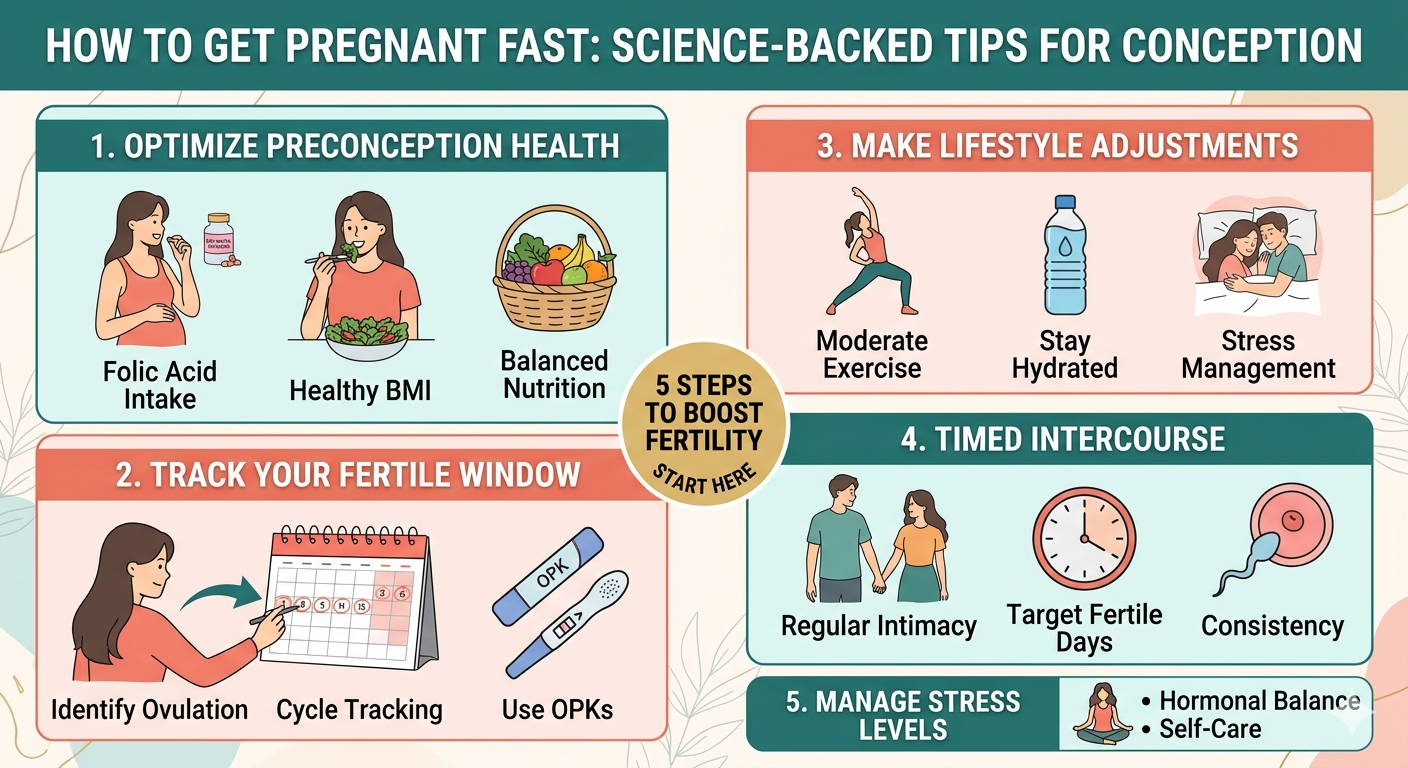
How to get pregnant fast? When you have made the decision to try for a baby the natural instinct is to want it to happen as quickly as possible. And while there is no guaranteed formula for instant conception there is a substantial body of research identifying specific factors that meaningfully increase your chances of getting pregnant each cycle. The difference between couples who conceive quickly and those who struggle for months is often not luck — it is knowledge. Knowing when to try, how to optimize your body, and what to avoid can significantly shorten the time it takes to see that positive test. In this article we are going to walk through 9 evidence-based tips for getting pregnant faster — practical, actionable steps grounded in real reproductive science that you can start implementing right now.
Tip 1 — Know Exactly When You Are Ovulating
This is the single most impactful thing you can do to get pregnant faster — and it is where the majority of couples who struggle with conception are going wrong.
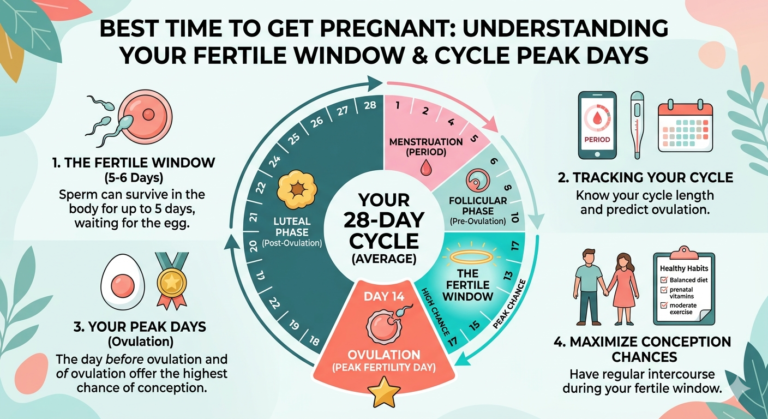
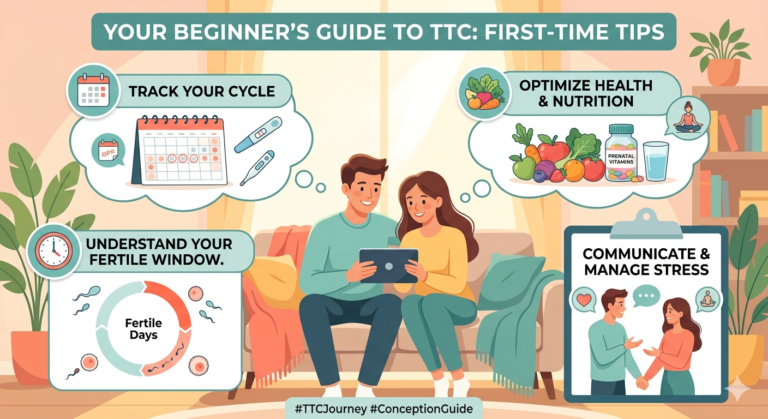
The fertile window — the only time in your cycle when pregnancy is possible — is just 6 days long. It consists of the 5 days before ovulation and the day of ovulation itself. And within that window the 2 to 3 days immediately before ovulation are your highest-probability days for conception.
Many couples time intercourse based on the assumption that ovulation happens on day 14 of a 28-day cycle. But this is an average — not a universal truth. A woman with a 30-day cycle ovulates around day 16. A woman with a 26-day cycle ovulates around day 12. Missing your actual ovulation day by even 2 to 3 days can mean missing the entire fertile window.
The most effective approach combines a calculated estimate with real-time tracking — see our complete guide to tracking ovulation for a full breakdown of OPKs, cervical mucus monitoring, and BBT charting, and how to combine them.
Start by using our Free Ovulation Calculator to estimate your ovulation date based on your cycle length — then use OPK strips starting a few days before that estimated date to catch your actual LH surge.
Tip 2 — Time Intercourse Correctly
Knowing when you ovulate is only half of the equation — the other half is knowing when to have intercourse relative to ovulation for the best chance of conception.
Here is the counterintuitive truth that surprises many couples: having intercourse on ovulation day itself actually carries a lower probability of conception than having intercourse in the 1 to 2 days before ovulation. The egg is only viable for 12 to 24 hours after release — and by the time you identify ovulation has occurred the optimal window may already be closing.
For the full day-by-day probability breakdown — including exactly how much higher your chances are on each specific day — see our complete guide to the best time to get pregnant.
The research-backed recommendation is to have intercourse every 1 to 2 days during the fertile window — starting 4 to 5 days before your estimated ovulation date and continuing through ovulation day. You do not need to have intercourse multiple times per day — daily or every other day is sufficient and actually optimal for sperm quality.
Tip 3 — Start Taking a Prenatal Vitamin Now
The recommendation to start a prenatal vitamin before you are pregnant is one of the most consistently emphasized pieces of preconception advice — and one of the most commonly ignored.
The reason it matters so much is folic acid. Neural tube defects — serious birth defects affecting the brain and spine — develop in the first 28 days of pregnancy — often before a woman even knows she is pregnant. Adequate folic acid in the body at the moment of conception and in the first weeks of pregnancy is critical for preventing these defects.
The recommended dose is at least 400 to 800 micrograms of folic acid daily starting at least 1 month before trying to conceive — though ideally 3 months before. Women with a history of neural tube defects or certain medical conditions may be advised to take a higher dose — discuss this with your doctor.
Beyond folic acid a good prenatal vitamin also provides iron, calcium, vitamin D, iodine, and DHA — all nutrients that support both preconception health and early fetal development. Starting now rather than waiting for a positive test gives your body time to build optimal nutrient stores before pregnancy begins.
Tip 4 — Optimize Your Preconception Health
Your overall health going into conception directly affects both your ability to conceive and the health of the pregnancy. Several specific health factors have clear evidence behind them for improving conception chances.
Achieve a Healthy Weight
Both being significantly underweight and being significantly overweight can disrupt ovulation and reduce fertility. Excess body fat increases estrogen production which can disrupt the hormonal balance needed for regular ovulation. Very low body fat suppresses reproductive hormone production entirely. Achieving and maintaining a weight that supports regular cycles is one of the most impactful preconception health steps you can take.
Stop Smoking
Smoking significantly reduces fertility in both women and men. In women smoking affects egg quality, ovarian reserve, and fallopian tube function. It also increases the risk of miscarriage, ectopic pregnancy, and pregnancy complications. If you smoke quitting before trying to conceive is one of the single most important things you can do for your fertility and your baby’s health.
Limit Alcohol
Heavy alcohol consumption is associated with reduced fertility and increased miscarriage risk. While moderate drinking (one to two drinks per week) has not been definitively proven to impair fertility, many fertility specialists recommend avoiding alcohol entirely when trying to conceive — particularly because the early weeks of pregnancy before a positive test are when the developing embryo is most vulnerable.
Reduce Caffeine
High caffeine intake — more than 200 to 300mg per day or roughly 2 large coffees — has been associated with slightly increased time to conception and increased miscarriage risk in some studies. Reducing caffeine intake to under 200mg per day is a reasonable preconception precaution.
Tip 5 — Track Your Cycle for at Least 2 to 3 Months Before TTC
If you have not yet started trying to conceive — or if you have only just started — spending 2 to 3 months tracking your cycle before or alongside your TTC efforts is one of the most valuable investments of time you can make.
Cycle tracking gives you accurate information about your average cycle length, your typical ovulation timing, the length of your luteal phase, and whether there are any irregularities worth discussing with your doctor before they become a prolonged obstacle.
Use our Free Period Tracker to log your cycles and our Free Ovulation Calculator to identify your fertile window each month. The more data you have the more accurately you can time conception attempts.
Tip 6 — Have Your Partner Optimize His Sperm Health
Conception is a two-person equation and male factor infertility contributes to approximately 40% to 50% of all cases of difficulty conceiving. Yet preconception health advice for partners is dramatically underemphasized compared to advice for women.
Sperm health has three key parameters — count, motility (ability to swim), and morphology (shape). All three can be significantly influenced by lifestyle factors.
Heat Exposure
Sperm production requires temperatures slightly below core body temperature — which is why the testes are located outside the body. Frequent use of hot tubs, saunas, or very hot baths can temporarily impair sperm production. Tight underwear, laptops balanced on the lap, and sedentary work that keeps the thighs pressed together can also raise scrotal temperature. Switching to looser underwear and minimizing heat exposure is a simple, evidence-backed optimization.
Diet and Antioxidants
A diet rich in antioxidants — vitamin C, vitamin E, zinc, selenium, and folate — supports sperm quality by protecting sperm cells from oxidative damage. Foods particularly beneficial for sperm health include walnuts, leafy greens, berries, eggs, and fatty fish.
Frequency of Ejaculation
For most men ejaculating every 2 to 3 days maintains optimal sperm count and quality. Abstaining for longer periods can increase count but may reduce motility. Daily ejaculation may reduce count slightly in men with borderline counts. Every 1 to 2 days during the fertile window is the generally recommended frequency for conception timing.
Avoid Smoking and Excessive Alcohol
Smoking damages sperm DNA and significantly impairs sperm quality across all parameters. Excessive alcohol reduces testosterone levels and impairs sperm production. Both should be reduced or eliminated when trying to conceive.
Tip 7 — Manage Stress Actively
The relationship between stress and fertility is real — though it is more nuanced than the oversimplified advice to just relax that many frustrated couples receive.
Chronic stress elevates cortisol which can suppress the hormonal signals that drive ovulation. In women under significant chronic stress ovulation may be delayed, shortened, or in extreme cases suppressed entirely. Research has also found that women who report higher levels of daily stress take longer to conceive than women with lower stress levels.
According to research highlighted by the National Institutes of Health, psychological stress is associated with reduced probability of conception in women trying to conceive naturally.
Effective stress management strategies for the TTC journey include setting limits around how much time you spend researching and symptom-spotting each day, maintaining social connections and activities outside of TTC, regular moderate exercise which is one of the most effective natural stress reducers, adequate sleep, and considering working with a therapist or counselor if TTC stress is significantly affecting your quality of life or relationship.
Tip 8 — See Your Doctor for a Preconception Checkup
A preconception health checkup — a medical appointment specifically to prepare your body for pregnancy — is one of the most underutilized resources available to women trying to conceive. Yet it can identify issues that might otherwise delay conception for months or longer before they are caught.
A preconception checkup typically includes a review of your menstrual cycle history and any known fertility concerns, blood pressure and general physical health assessment, testing for immunity to rubella and chickenpox (which can cause serious pregnancy complications if contracted during pregnancy), screening for sexually transmitted infections, cervical screening if overdue, review of any current medications that may be contraindicated in pregnancy, and blood tests for thyroid function, anemia, and blood sugar.
If you have a known medical condition — diabetes, thyroid disease, autoimmune conditions, mental health conditions — getting these optimally managed before conception significantly improves both fertility and pregnancy outcomes.
Aim to have your preconception checkup at least 3 months before you plan to start trying to give time to address any issues identified.
Tip 9 — Know When to Seek Specialist Help
One of the most important pieces of advice for couples trying to conceive is knowing when to stop trying on your own and seek expert support. Many couples wait far longer than necessary before consulting a fertility specialist — often spending additional months or years trying to conceive naturally when a treatable issue is present.
The standard guidelines for when to seek fertility evaluation are as follows.
Under 35 years old: see your doctor after 12 months of regular unprotected intercourse without conception.
35 to 39 years old: see your doctor after 6 months of trying without conception.
40 years or older: see your doctor right away before trying or after 3 months of trying without success.
At any age, see your doctor sooner if you have irregular or absent periods, known or suspected reproductive health conditions like PCOS or endometriosis, a history of pelvic inflammatory disease or sexually transmitted infections, two or more previous miscarriages, or known or suspected male factor issues.
Seeking help sooner rather than later is not giving up — it is being proactive about your reproductive health. Many fertility issues are highly treatable when caught early.
Trying to Conceive With Specific Circumstances
If you’re in one of these situations, general timing tips only tell part of the story — here’s what’s worth knowing.
Trying to Conceive Fast With PCOS
PCOS often makes ovulation irregular or unpredictable, which means calendar-based estimates are less reliable — real-time tracking (OPKs and cervical mucus monitoring) matters more than it does for someone with regular cycles. Achieving a moderate weight loss (even 5-10% of body weight, if applicable) has good evidence for improving ovulation regularity in PCOS specifically. Medical treatments like letrozole or metformin can be genuinely effective for PCOS-related ovulation issues, but these require your doctor’s guidance and monitoring — they’re not something to self-manage.
Trying to Conceive Fast After Age 40
Egg quantity and quality decline more significantly after 40, which affects both the chance of conceiving each cycle and miscarriage risk. Given this, it’s generally recommended not to wait the full 12 months before seeking a fertility evaluation — many specialists recommend seeing a doctor right away or after no more than 3 months of trying. This isn’t meant to be discouraging — many women do conceive naturally in their 40s — it’s simply about not losing valuable time.
Trying to Conceive After an Ectopic Pregnancy
This is a situation where individualized medical guidance matters more than general tips. Recovery time, whether one or both fallopian tubes were affected, and the treatment method used all affect the right timeline for trying again. Your doctor is best positioned to advise you on timing and any additional monitoring for your specific situation.
Trying to Conceive Twins Naturally
There’s no reliable, evidence-based way to intentionally conceive twins naturally. Family history of fraternal twins (on the mother’s side) and increasing maternal age are the two most established factors associated with naturally higher odds, but neither is something you can control or optimize for.
Frequently Asked Questions
How long does it normally take to get pregnant?
For couples having regular unprotected intercourse approximately 85% will conceive within 12 months. About 30% conceive in the first month of trying, around 60% by 6 months, and 85% by 12 months. After 12 months without conception a fertility evaluation is recommended for women under 35.
Does lying down after sex increase chances of conception?
The evidence on this is mixed. While some studies suggest lying down for 10 to 15 minutes after intercourse may marginally improve sperm migration others find no significant benefit. It is unlikely to hurt and costs nothing — but it is not a medically essential step.
Does lubricant affect conception chances?
Most commercial lubricants are harmful to sperm — they affect sperm motility and viability. If you need lubrication during the fertile window use a sperm-safe lubricant specifically designed for TTC — brands like Pre-Seed are formulated to be compatible with sperm. Water and saliva are also harmful to sperm and should be avoided.
Can I get pregnant with irregular periods?
Yes — but it may require more active tracking to identify ovulation since your fertile window is less predictable. OPK testing and cervical mucus monitoring are particularly valuable for women with irregular cycles. Use our Free Ovulation Calculator as a starting point and combine it with real-time tracking methods.
Does age affect how quickly you can get pregnant?
Yes — significantly. Female fertility begins to decline gradually in the late 20s, more noticeably from the mid-30s, and more sharply after 37 to 38. This is primarily due to a decline in both the quantity and quality of eggs with age. This does not mean pregnancy is impossible in your late 30s or early 40s — but it does mean seeking help sooner rather than later is important if you are not conceiving within the recommended timeframes.
What is the best sexual position for getting pregnant?
There is no scientific evidence that any particular sexual position significantly increases conception chances. Sperm are deposited near the cervix regardless of position and are capable of swimming to the fallopian tube from there without gravity assistance. Focus on timing rather than position for the greatest impact on conception probability.
The Bottom Line
Getting pregnant faster comes down to three core principles — knowing when you ovulate and timing intercourse to your fertile window, optimizing both partners’ health before conception, and seeking expert help promptly if needed rather than waiting indefinitely.
Start with the most impactful step first — accurately identifying your fertile window. Use our Free Ovulation Calculator to estimate your ovulation date right now based on your cycle length and combine that estimate with OPK testing and cervical mucus monitoring for the most accurate real-time information about your fertility each month.
Track your cycles consistently with our Free Period Tracker so you always have accurate cycle data — and when that positive test arrives use our Free Due Date Calculator to find out when your baby is expected.
Medical Disclaimer: This article is for educational purposes only and does not constitute medical advice, diagnosis, or treatment. Always consult your doctor or a reproductive specialist for personalized fertility advice. Read our full Medical Disclaimer.