
The Best Time to Get Pregnant in Your Cycle (And How to Know When It Is)
INTRO
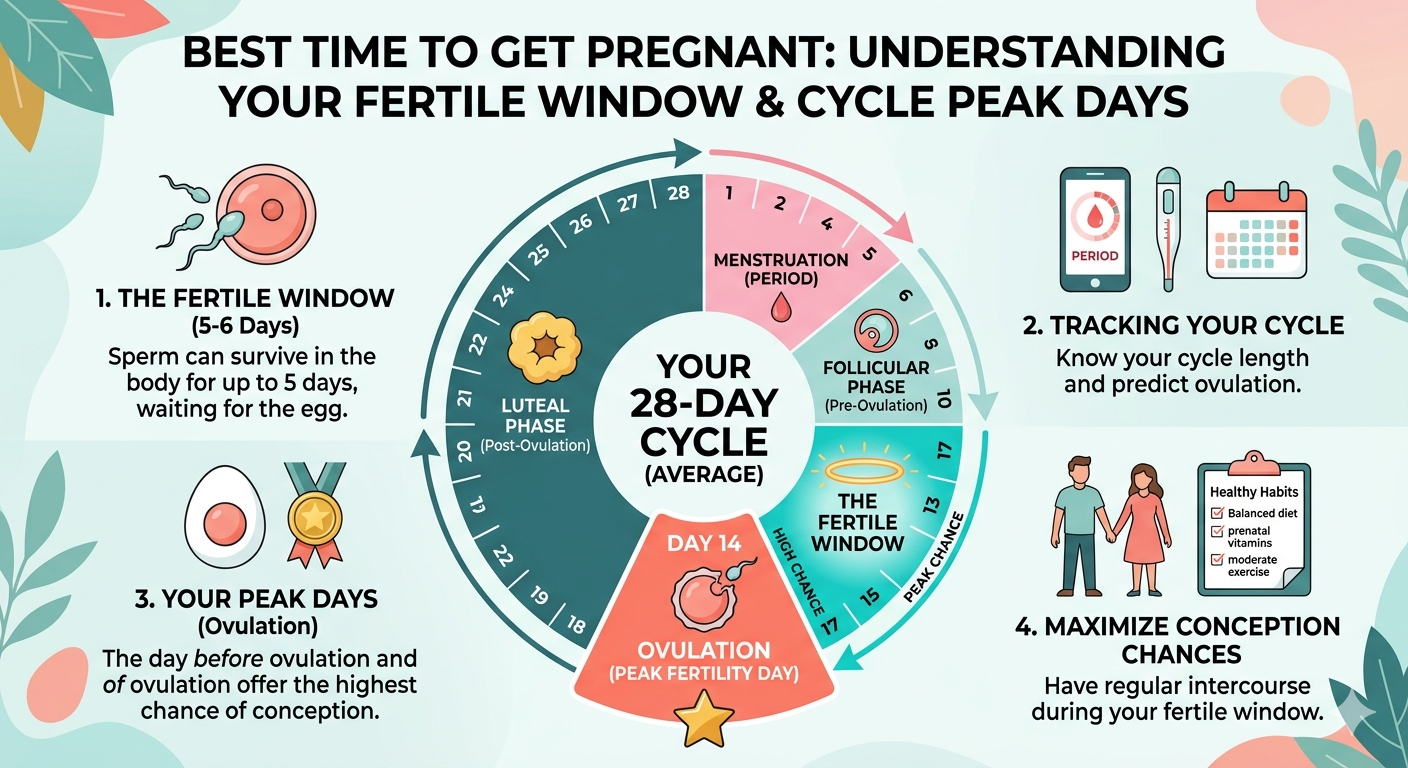
Timing is everything when it comes to conception — and understanding the best time to get pregnant in your cycle is one of the most powerful pieces of knowledge you can have when you are trying to conceive. Here is the reality that surprises many couples: pregnancy is only possible during a window of approximately 6 days each cycle. Outside of those 6 days conception simply cannot happen regardless of how frequently you have intercourse. But within that window — and more specifically in the 2 to 3 days right at the heart of it — your chances of conceiving in any given cycle are at their highest. In this article we are going to explain exactly when the best time to get pregnant is, why those specific days are most fertile, how to identify them accurately in your own cycle, and how to make the most of your fertile window every single month.
The Biology Behind the Best Time to Get Pregnant
To understand when the best time to conceive is you first need to understand the two biological facts that create your fertile window.
Fact one — after ovulation the egg is only viable for 12 to 24 hours. Once that window closes the egg dissolves and pregnancy is no longer possible until the next cycle.
Fact two — sperm can survive inside the female reproductive tract for up to 5 days when fertile cervical mucus is present to protect and nourish them.
Combine these two facts and you get a fertile window of approximately 6 days — the 5 days before ovulation and the day of ovulation itself. This is the only time during your entire cycle when pregnancy is biologically possible.
Use our Free Ovulation Calculator to find your estimated fertile window right now based on your last period date and average cycle length.
Your Single Best Day to Conceive
Within the 6-day fertile window one day consistently shows the highest probability of conception in research studies — and it may not be the day you expect.
The day with the highest single-cycle conception probability is the day before ovulation — not ovulation day itself. Research published in the New England Journal of Medicine consistently shows that intercourse on the day before ovulation carries a conception probability of approximately 30% to 35% per cycle whereas intercourse on ovulation day itself carries a lower probability of approximately 10% to 15%.
The reason is straightforward: sperm deposited the day before ovulation are already in the fallopian tube — or traveling toward it — when the egg is released. This gives them the best possible chance of meeting the egg at the optimal moment. By the time you identify that ovulation has occurred on ovulation day itself the egg has already been released and is already beginning its 12 to 24 hour countdown.
The practical implication is significant: the goal of ovulation tracking is not to identify when ovulation has occurred so you can act — it is to identify that ovulation is approaching so you can act before it happens.
Your Peak Fertile Days — A Breakdown by Day
Here is a clear breakdown of conception probability by day within the fertile window based on research data.
5 days before ovulation — approximately 10% chance of conception. Sperm can survive to fertilize the egg but the probability is lower because a significant amount of time passes before the egg is released.
4 days before ovulation — approximately 16% chance. Probability begins to rise as the egg approaches release.
3 days before ovulation — approximately 14% chance.
3 days before ovulation, chances of pregnancy are still meaningful, though lower than the two peak days that follow.
1 day before ovulation — approximately 30% to 35% chance. This is your single highest-probability day. The sperm deposited today are ideally positioned to fertilize the egg as it is released.
Ovulation day — approximately 10% to 15% chance. Still worth covering but lower probability than the previous 2 days because the egg is already released and beginning to deteriorate.
1 day after ovulation — essentially zero. The egg has dissolved and the fertile window is closed.
How to Identify Your Best Days to Conceive
Knowing that your peak days are the 2 days before ovulation is only useful if you can accurately identify when those days are. Here are the most effective methods for doing so.
Three real-time tracking methods can help you pinpoint these days: OPK strips detect the LH surge 24–36 hours before ovulation, giving you advance warning. Cervical mucus monitoring is free and shows clear, stretchy egg-white mucus as your peak days approach. BBT charting confirms after the fact that ovulation occurred, helping you learn your pattern over time.
For a complete step-by-step guide to using each method, see our complete guide to tracking ovulation.
Method 4 — The Ovulation Calculator
Our Free Ovulation Calculator uses your last period date and average cycle length to estimate your ovulation date and identify your fertile window. This gives you a personalized starting point for tracking — so you know when to begin OPK testing and what days to prioritize for intercourse each cycle.
The Best Time to Get Pregnant by Cycle Length
Because ovulation timing varies with cycle length your peak fertile days fall on different calendar dates depending on how long your cycle is. Here is a quick reference guide.
21-day cycle — ovulation around day 7. Peak days approximately days 5 to 7. Fertile window approximately days 2 to 8. Note — with a 21-day cycle your fertile window begins very shortly after your period ends. Tracking is especially important.
24-day cycle — ovulation around day 10. Peak days approximately days 8 to 10. Fertile window approximately days 5 to 11.
26-day cycle — ovulation around day 12. Peak days approximately days 10 to 12. Fertile window approximately days 7 to 13.
28-day cycle — ovulation around day 14. Peak days approximately days 12 to 14. Fertile window approximately days 9 to 15.
30-day cycle — ovulation around day 16. Peak days approximately days 14 to 16. Fertile window approximately days 11 to 17.
32-day cycle — ovulation around day 18. Peak days approximately days 16 to 18. Fertile window approximately days 13 to 19.
35-day cycle — ovulation around day 21. Peak days approximately days 19 to 21. Fertile window approximately days 16 to 22.
For your personalized dates based on your exact cycle length and last period date use our Free Ovulation Calculator.
How Often Should You Have Intercourse During the Fertile Window?
This is one of the most common questions couples have when they start timing conception — and the answer may be less complicated than you think.
The research-backed recommendation for most couples is to have intercourse every 1 to 2 days during the fertile window. Daily intercourse during the fertile window is also effective for men with normal sperm counts. Having intercourse more frequently than once daily does not improve conception chances and may marginally reduce sperm count in some men.
A practical approach many fertility specialists recommend is to begin having intercourse every 2 days from 5 days before your estimated ovulation date and continue through ovulation day. When your OPK turns positive add same-day intercourse to make sure you cover your peak window.
There is no need to time intercourse to a specific time of day — morning, afternoon, or evening are all equally effective. The important thing is covering the right days not the right hour.
What About the Days Outside the Fertile Window?
A common misconception is that having intercourse frequently throughout the entire cycle improves conception chances. It does not — outside the fertile window pregnancy is not biologically possible regardless of frequency.
However maintaining a regular intimate relationship throughout the cycle rather than reserving intercourse exclusively for the fertile window has psychological benefits for couples trying to conceive. The TTC process can become clinical and stressful when intercourse is purely goal-oriented. Maintaining physical intimacy outside the fertile window helps preserve the health of the relationship during what can be a demanding time.
Factors That Can Shift Your Best Days
Your peak fertile days do not always fall at exactly the same point in your cycle. Several factors can shift ovulation earlier or later — and therefore shift your best days accordingly.
Stress — chronic or acute stress can delay ovulation by several days by disrupting the hormonal signals from the hypothalamus that trigger the LH surge.
Illness — a significant illness particularly one involving fever can delay ovulation by pushing back the hormonal cascade that leads to egg release.
Travel — crossing multiple time zones disrupts the circadian rhythm that regulates hormone production and can shift ovulation timing.
Changes in sleep — significant disruption to normal sleep patterns can affect melatonin and cortisol levels in ways that delay ovulation.
Changes in exercise intensity — dramatic increases in training volume can suppress or delay ovulation particularly when combined with a caloric deficit.
This is why relying solely on a calendar or app prediction without real-time tracking can cause you to miss your fertile window in months when any of these factors are at play. OPK testing and cervical mucus monitoring respond to what is actually happening in your body rather than what a prediction algorithm expects — making them essential tools for accurate fertile window identification in real life.
How Long Should You Try Before Seeking Help?
Even when you are perfectly timing intercourse to your fertile window every cycle it can take time to conceive. For couples where the woman is under 35 and both partners are in good reproductive health up to 12 months of well-timed attempts is considered normal before a fertility evaluation is recommended.
However if you have been timing intercourse accurately to your fertile window for 6 months or more without success — or if you have any known reproductive health concerns — seeking an evaluation sooner rather than later is a reasonable and proactive step.
Track your cycles consistently with our Free Period Tracker so you have a detailed record of your cycle history to bring to any medical appointment.
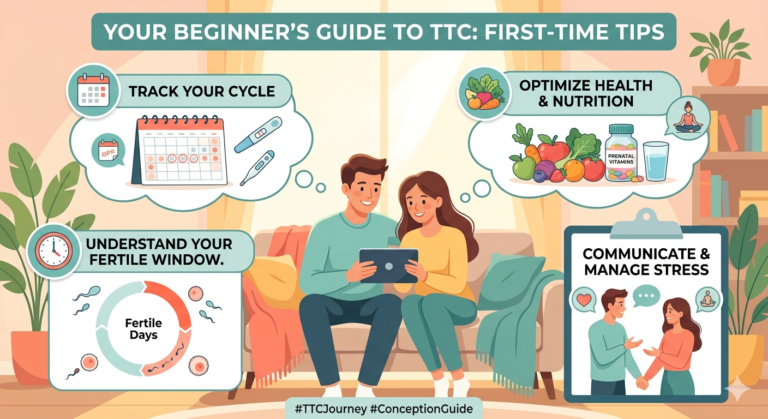
For general TTC guidance beyond timing specifically, see our complete beginner’s guide to trying to conceive.
Frequently Asked Questions
Is ovulation day or the day before the best day to conceive?
The day before ovulation consistently shows the highest single-day conception probability in research — approximately 30% to 35% compared to 10% to 15% on ovulation day itself. This is because sperm deposited the day before ovulation are ideally positioned in the fallopian tube when the egg is released. Aim to cover both days for the best overall chance.
Can you get pregnant right after your period?
It is possible but unlikely for most women — and depends entirely on cycle length. Women with very short cycles (21 to 24 days) may ovulate as early as day 7 to 10 meaning their fertile window can begin immediately after their period ends. For women with longer cycles the fertile window is well separated from menstruation. Use our Free Ovulation Calculator to find your specific fertile window based on your cycle length.
How do I know if I missed my fertile window this cycle?
A sustained rise in your basal body temperature above your pre-ovulation baseline indicates that ovulation has occurred and the fertile window has closed for that cycle. Cervical mucus returning to a sticky or dry texture also signals the end of the fertile window. If you missed your window this cycle focus on identifying it more accurately next cycle using OPK testing starting several days earlier.
Does time of day affect conception chances?
There is no meaningful evidence that time of day affects conception chances. Some research suggests sperm count is slightly higher in the morning but the difference is not clinically significant for most couples. Focus on covering the right days within your fertile window rather than the right time of day.
Can you get pregnant outside the 6-day fertile window?
Technically no — pregnancy requires a live egg and live sperm to meet in the fallopian tube. Outside the fertile window either the egg has not yet been released or has already dissolved. The only way a pregnancy could seem to occur outside the expected fertile window is if ovulation was significantly earlier or later than predicted — which is why accurate real-time tracking is so much more reliable than calendar-based prediction.
Does fertile cervical mucus always appear before ovulation?
For most women yes — egg-white cervical mucus appears in the 2 to 4 days before ovulation as estrogen rises. However some women produce less noticeable mucus changes, particularly women who are taking antihistamines (which dry mucus membranes including cervical mucus), women who are well into their 30s, and women with certain hormonal conditions. If you do not notice clear EWCM rely more heavily on OPK testing to identify your fertile window.
The Bottom Line
The best time to get pregnant is in the 2 to 3 days immediately before ovulation — with the day before ovulation being your single highest-probability day for conception. Your overall fertile window spans 6 days ending on ovulation day and every day within it offers a real possibility of conception.
The key to making the most of your fertile window every cycle is accurate identification — which means combining an estimated ovulation date from our Free Ovulation Calculator with real-time tracking using OPK strips and cervical mucus monitoring. Together these tools give you a complete and reliable picture of your fertility each month.
Track your cycles consistently with our Free Period Tracker so you always have accurate cycle data — and when that positive test arrives use our Free Due Date Calculator to find out when your baby is expected.
Medical Disclaimer: This article is for educational purposes only and does not constitute medical advice, diagnosis, or treatment. Always consult your doctor or a reproductive specialist for personalized fertility advice. Read our full Medical Disclaimer.
One Comment