
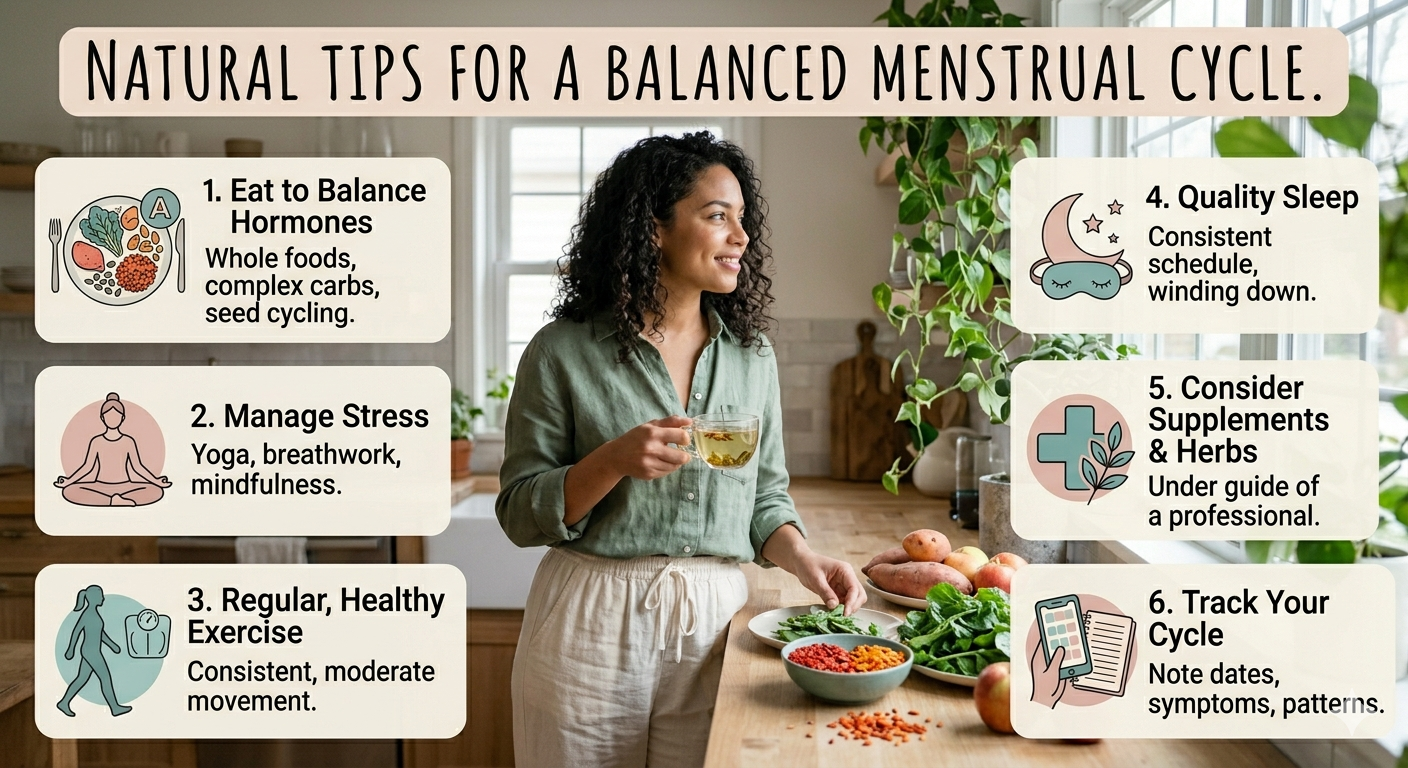
How to Regulate Your Period Naturally: 8 Evidence-Based Tips
INTRO
If your period feels unpredictable, How to regulate your period? — arriving too early, too late, too heavy, too light, or skipping months entirely — you are probably wondering whether there is anything you can actually do about it without immediately jumping to medication or birth control. The good news is that for many women there are meaningful, evidence-based lifestyle changes that can genuinely help regulate the menstrual cycle naturally. These are not miracle cures and they are not one-size-fits-all solutions. But they are grounded in real science and consistently recommended by reproductive health specialists as first-line approaches before turning to pharmaceutical interventions. In this article we are going to walk through 8 of the most effective natural strategies for regulating your period — what the research says, how to implement each one, and who is most likely to benefit.
Why Your Period Becomes Irregular in the First Place
Before diving into solutions it helps to understand the underlying mechanism. Your menstrual cycle is regulated by a finely tuned hormonal system involving your brain, your pituitary gland, and your ovaries — often called the hypothalamic-pituitary-ovarian (HPO) axis.
When anything disrupts this system — stress, nutritional deficiencies, weight changes, sleep disruption, inflammation, or underlying hormonal conditions — the result is cycle irregularity. Natural approaches to regulating your period work by addressing these root disruptions rather than overriding them with synthetic hormones.
This is why tracking your cycle carefully before trying any of these strategies is so important. Use our Free Period Tracker to log your cycles and identify patterns — the data will help you understand which potential causes might be at play and whether your cycle is improving over time.
For a full breakdown of the 11 most common causes, see our guide to irregular period causes.
Tip 1 — Manage Stress Consistently
If there is one factor that disrupts more menstrual cycles than any other it is chronic stress. And this is not just anecdotal — the science is clear.
When you are chronically stressed your body produces elevated levels of cortisol. High cortisol suppresses GnRH — the hormone your hypothalamus releases to kick off the cascade that leads to ovulation. No GnRH signal means no ovulation. No ovulation means no regular period.
According to research published by the American Psychological Association, chronic stress has measurable effects on reproductive hormones in women, contributing to cycle irregularity and fertility challenges.
The most effective stress management strategies for hormonal health include consistent sleep of 7 to 9 hours per night, regular moderate exercise, mindfulness meditation practiced even for just 10 minutes daily, time spent in nature, reducing caffeine intake especially in the afternoon, setting boundaries around work and technology, and talking to a therapist or counselor if stress feels unmanageable.
Who benefits most: Women whose irregular periods coincide with high-stress periods in their lives — a demanding job, a relationship breakdown, a move, or a major life change.
Tip 2 — Maintain a Healthy Weight for Your Body
Body weight has a direct and significant impact on menstrual regularity — in both directions. Both being significantly underweight and carrying excess weight can disrupt the hormonal balance needed for regular ovulation and menstruation.
When body fat is too low the body does not have the energy reserves to support reproduction and reduces hormone production accordingly — leading to light, infrequent, or absent periods. When body fat is too high excess adipose tissue produces additional estrogen which can disrupt the ratio of hormones needed for a normal cycle.
The key word here is healthy weight for your body — not a specific number on the scale. For most women maintaining a weight that supports regular energy levels, hunger and fullness cues, and hormonal balance is the goal. Crash dieting or extreme weight loss efforts can make cycle irregularity significantly worse even if the intention is to improve health.
Who benefits most: Women who have experienced significant weight loss or gain in the months preceding cycle irregularity, women with a very low body weight, and women with obesity-related hormonal disruption.
Tip 3 — Prioritize Sleep Quality
Sleep is one of the most underestimated factors in hormonal health. Your reproductive hormones follow a circadian rhythm — meaning they are produced and regulated according to your sleep-wake cycle. Disrupted sleep — whether from insomnia, shift work, late nights, or poor sleep quality — directly interferes with this hormonal rhythm.
Research has found that women who work night shifts or have highly variable sleep schedules have significantly higher rates of menstrual irregularity than women with consistent sleep patterns. Even chronic mild sleep deprivation — sleeping 5 to 6 hours when your body needs 7 to 9 — can affect cortisol and melatonin levels in ways that ripple through your entire hormonal system.
Practical steps to improve sleep quality include going to bed and waking at the same time every day including weekends, keeping your bedroom cool and completely dark, avoiding screens for at least 30 minutes before bed, limiting caffeine after noon, and avoiding alcohol within 3 hours of bedtime.
Who benefits most: Women with variable or poor sleep habits, shift workers, new parents, and women who regularly stay up late or have inconsistent wake times.
Tip 4 — Eat a Nutrient-Dense Anti-Inflammatory Diet
What you eat has a real and measurable impact on your hormonal health and therefore your menstrual cycle. A diet high in ultra-processed foods, refined carbohydrates, and inflammatory fats can drive up insulin, cortisol, and inflammatory markers — all of which can disrupt your cycle.
Conversely a diet rich in whole foods, healthy fats, fiber, and key micronutrients supports the hormonal balance your cycle depends on.
Key Foods to Include
Healthy fats from avocado, olive oil, fatty fish like salmon, nuts, and seeds — these are essential building blocks for hormone production. Your body literally cannot make estrogen and progesterone without adequate dietary fat.
Fiber-rich vegetables and legumes — help the liver process and excrete excess estrogen, preventing estrogen dominance.
Complex carbohydrates like sweet potato, oats, quinoa, and brown rice — support stable blood sugar and insulin levels which are closely tied to ovarian hormone production.
Iron-rich foods like lean red meat, lentils, spinach, and pumpkin seeds — particularly important if you have heavy periods and may be iron-deficient.
Key Foods to Limit
Ultra-processed foods, sugar-sweetened beverages, and refined carbohydrates drive insulin spikes and systemic inflammation that can worsen hormonal imbalances.
Excessive alcohol — metabolized by the liver, which is also responsible for processing hormones. Heavy drinking can impair estrogen clearance and disrupt cycle timing.
Who benefits most: Women whose diet is high in processed foods, women with PCOS or insulin resistance, and women experiencing estrogen dominance symptoms like heavy bleeding and PMS.
Tip 5 — Exercise at the Right Intensity
Exercise is excellent for hormonal health — but the type and intensity matter enormously. There is a significant difference between the cycle-regulating benefits of moderate exercise and the cycle-disrupting effects of extreme training.
Moderate aerobic exercise — walking, swimming, cycling, yoga, dancing — supports healthy cortisol regulation, improves insulin sensitivity, reduces inflammation, and promotes a healthy body weight. All of these factors contribute to more regular cycles. Aim for 30 minutes of moderate movement most days of the week.
High-intensity exercise in large volumes — marathon training, competitive athletics, CrossFit multiple times per day — can suppress reproductive hormones and cause what sports medicine specialists call relative energy deficiency in sport (RED-S), leading to irregular or absent periods.
If you are currently exercising intensely and experiencing cycle irregularity the most effective intervention is to reduce training volume, increase caloric intake to match your energy output, and incorporate adequate rest days.
Who benefits most: Sedentary women who start moving more, and women who are overtraining and need to scale back.
Tip 6 — Consider Key Supplements
While supplements are never a substitute for addressing underlying causes, several specific nutrients have good evidence behind them for supporting menstrual regularity. Always discuss supplementation with your doctor before starting, particularly if you have an underlying health condition or are trying to conceive.
Magnesium
Magnesium is involved in over 300 enzymatic reactions in the body including many related to hormone production and regulation. Magnesium deficiency is extremely common and has been linked to PMS, painful periods, and cycle irregularity. Foods rich in magnesium include dark chocolate, leafy greens, almonds, and pumpkin seeds. A supplement of 200 to 400mg of magnesium glycinate daily is commonly recommended for hormonal support.
Vitamin B6
Vitamin B6 plays an important role in progesterone production and the regulation of hormones throughout the cycle. It has been shown in multiple studies to reduce PMS symptoms and may support a healthier luteal phase. Found in chicken, fish, potatoes, bananas, and fortified cereals — or available as a supplement typically at 50 to 100mg daily.
Vitamin D
Vitamin D deficiency is extremely widespread — particularly in northern states and among women who spend limited time outdoors. Low vitamin D has been associated with irregular cycles, PCOS, and reduced fertility. Most adults benefit from a vitamin D3 supplement of 1,000 to 2,000 IU daily — though your doctor can test your levels and recommend a specific dose.
Omega-3 Fatty Acids
Omega-3s — found in fatty fish, flaxseeds, walnuts, and fish oil supplements — have potent anti-inflammatory effects that can support hormonal balance and reduce the severity of period pain. Research suggests omega-3 supplementation may help regulate cycles in women with PCOS in particular.
Inositol (for PCOS)
For women with PCOS specifically, inositol — particularly myo-inositol — has strong evidence supporting its ability to improve insulin sensitivity, restore ovulation, and regulate cycles. It is one of the most researched natural supplements for PCOS-related cycle irregularity and is widely recommended by reproductive endocrinologists as a first-line supplement.
Who benefits most: Women with nutritional gaps in their diet, women with PCOS, and women with PMS or painful periods.
Tip 7 — Reduce Exposure to Endocrine Disruptors
Endocrine disruptors are chemicals found in everyday products that can interfere with your body’s hormonal system. They mimic or block natural hormones and can disrupt the delicate balance needed for regular ovulation and menstruation.
Common sources of endocrine disruptors include plastic food containers and water bottles containing BPA or phthalates, conventional pesticide-treated produce, synthetic fragrances in personal care products, non-stick cookware coated with PFAS chemicals, and bleached tampons or pads.
Practical steps to reduce exposure include using glass or stainless steel food and drink containers, choosing fragrance-free personal care products, washing produce thoroughly or buying organic for the most heavily sprayed items, using cast iron or stainless steel cookware, and switching to organic or unbleached period products or a menstrual cup.
Who benefits most: All women — particularly those with unexplained hormonal disruption, endometriosis, or PCOS where inflammation and estrogen dominance are concerns.
Tip 8 — Try Seed Cycling (With a Simple Seed Cycling Chart)
Seed cycling is a food-based approach to hormonal balance that involves eating specific seeds during each phase of your menstrual cycle to support estrogen production in the first half and progesterone production in the second half.
| Cycle Phase | When | Seeds to Eat Daily | Why |
|---|---|---|---|
| Follicular Phase | Day 1 through ovulation | 1 tbsp ground flaxseed + 1 tbsp pumpkin seeds | Lignans and zinc support healthy estrogen levels and follicle development |
| Luteal Phase | Ovulation through end of cycle | 1 tbsp sesame seeds + 1 tbsp sunflower seeds | Selenium and vitamin E support progesterone production and corpus luteum function |
Not sure which phase you’re in? Use our Free Ovulation Calculator to identify when each phase of your cycle begins so you know when to switch seeds.
It is worth noting that seed cycling is not yet supported by large-scale clinical trials — the evidence is largely anecdotal and mechanistic. However the seeds involved are genuinely nutritious, the practice carries no risk, and many women report noticing improvements in their cycle after 2 to 3 months of consistent seed cycling. Use our Free Ovulation Calculator to identify when each phase of your cycle begins so you know when to switch seeds.
Who benefits most: Women looking for a gentle, food-based approach to hormonal support with no risk of side effects.
How Long Does It Take to Regulate Your Period Naturally?
This is one of the most common questions and the honest answer is: it depends on the cause and the severity of the disruption.
Stress-related irregularity often resolves within 1 to 2 cycles once the stressor is addressed. Weight-related disruption may take 3 to 6 months of sustained healthy weight maintenance before cycles normalize. Nutritional deficiencies typically improve within 2 to 3 months of consistent supplementation. PCOS-related irregularity often requires longer-term management with a combination of lifestyle and medical support.
The key is consistency — and tracking. Use our Free Period Tracker every single cycle so you can see clearly whether your cycle is becoming more regular over time. Month by month data is far more useful than trying to assess progress from memory.
When Natural Approaches Are Not Enough
Natural strategies are powerful — but they are not appropriate for every situation. If your irregular periods are caused by an underlying condition like PCOS, a thyroid disorder, hyperprolactinemia, endometriosis, or fibroids, lifestyle changes alone are unlikely to fully resolve the issue. Medical treatment is needed alongside lifestyle support.
See your doctor without delay if you have missed 3 or more consecutive periods, if you are trying to conceive without success, if you have severe period pain or very heavy bleeding, or if cycle irregularity has developed suddenly without an obvious lifestyle-related cause.
If you suspect PCOS specifically, our PCOS-focused causes section has more detail on diagnosis and next steps.
Frequently Asked Questions
Can diet alone regulate my period?
For some women yes — particularly if diet is a significant contributing factor to their hormonal imbalance. For others diet is one piece of a larger puzzle that also includes stress management, sleep, exercise, and potentially medical treatment. There is no single dietary silver bullet but consistently eating a whole-food anti-inflammatory diet is one of the most impactful things you can do for your hormonal health.
How do I know if my period is becoming more regular?
Track the start date of every period in our Free Period Tracker and calculate the number of days between each period. If the variation between cycles is decreasing over time — for example going from cycles of 21 to 42 days down to cycles of 26 to 32 days — your cycle is becoming more regular even if it is not yet perfectly consistent.
Is it safe to try to regulate my period naturally while trying to conceive?
Yes — in fact most of these strategies support both cycle regularity and fertility simultaneously. Healthy weight, good nutrition, stress management, and appropriate supplementation all create a more favorable environment for conception. Just be sure to discuss any supplements with your doctor before starting them if you are actively trying to conceive.
Can exercise help regulate irregular periods?
Moderate exercise can definitely support cycle regularity by improving insulin sensitivity, reducing stress, and supporting healthy body weight. The key is moderate — too little or too much can both be counterproductive. Aim for 150 minutes of moderate activity per week as a starting point.
Does seed cycling actually work?
The evidence is largely anecdotal rather than from large clinical trials. However the seeds used in seed cycling are genuinely nutritious and carry no risk. Many women report improvements after 2 to 3 months of consistent use. It is a reasonable thing to try alongside other lifestyle changes — just do not rely on it alone if you have a significant underlying hormonal condition.
How long should I try natural approaches before seeing a doctor?
If your cycle irregularity is mild and you have a clear lifestyle-related cause — high stress, recent weight change, overtraining — give natural approaches 3 months of consistent effort. If there is no improvement after 3 months, if your irregularity is severe, or if you are trying to conceive, see your doctor sooner rather than later.
The Bottom Line
Regulating your period naturally is absolutely possible for many women — but it requires consistency, patience, and a realistic understanding of what lifestyle changes can and cannot address. Managing stress, maintaining a healthy weight, prioritizing sleep, eating a nutrient-dense diet, exercising at the right intensity, considering targeted supplementation, reducing endocrine disruptor exposure, and exploring seed cycling are all evidence-informed strategies worth implementing.
Start by tracking your cycle in detail with our Free Period Tracker so you have a clear baseline to measure your progress against. Then implement two or three of these strategies consistently for 3 months and see what changes. Most women who commit to this process notice meaningful improvements in their cycle within one to three months.
And if you are also monitoring your fertile window alongside your cycle regularity use our Free Ovulation Calculator to track when ovulation is likely to occur as your cycle becomes more predictable.
Medical Disclaimer: This article is for educational purposes only and does not constitute medical advice, diagnosis, or treatment. Always consult your doctor, OB-GYN, or qualified healthcare provider before making changes to your diet, exercise, or supplement routine. Read our full Medical Disclaimer.
One Comment