
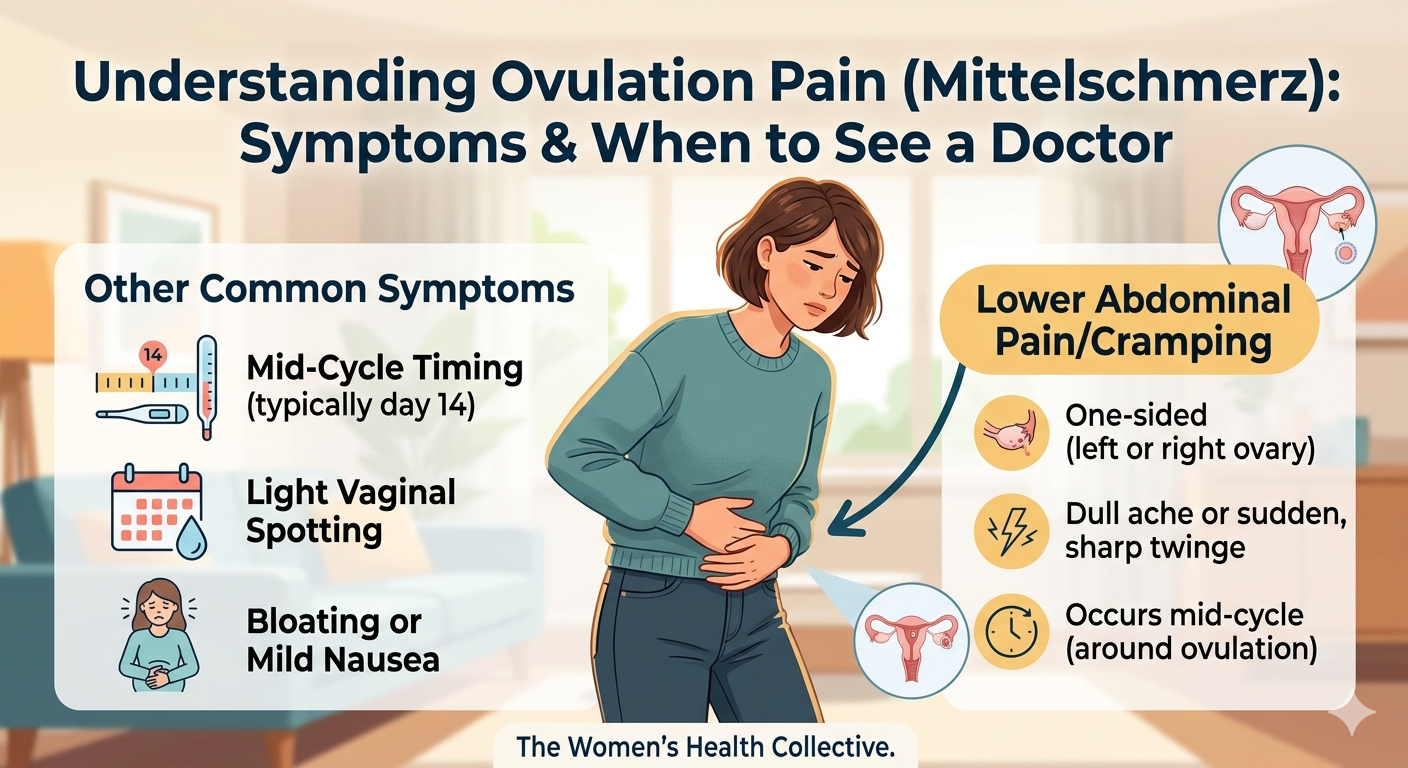
Ovulation Pain (Mittelschmerz): Is It Normal and What Does It Feel Like?
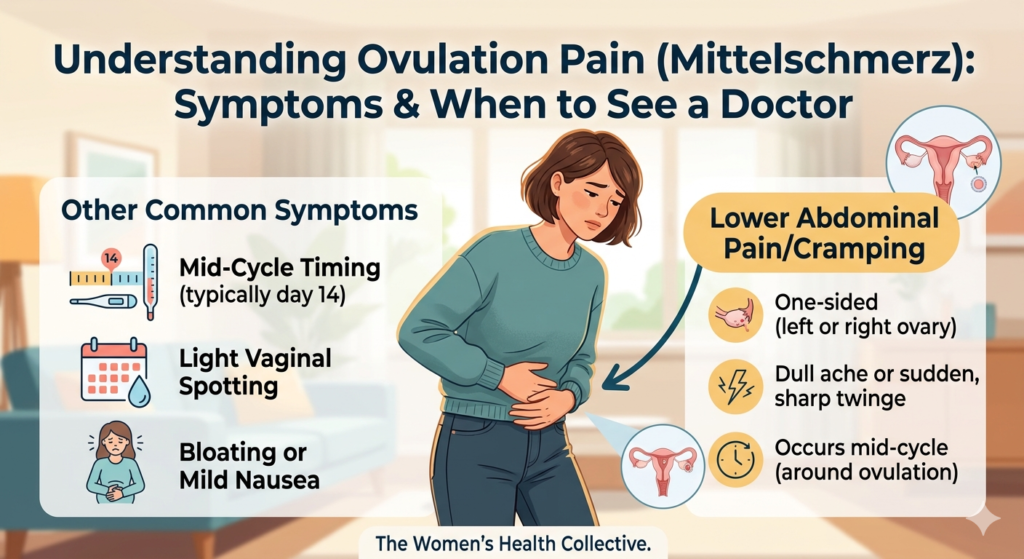
If you have ever felt a sharp twinge or dull ache on one side of your lower abdomen right around the middle of your cycle — and wondered what on earth it was — you are not imagining things. That sensation has a name: mittelschmerz (pronounced roughly MIT-uhl-shmerts). It is a German word meaning middle pain and it refers specifically to the discomfort some women feel around the time of ovulation each month. For some women it is barely noticeable. For others it is hard to miss. In this article we are going to cover everything you need to know about ovulation pain — what it feels like, why it happens, how long it lasts, how to tell it apart from other types of pelvic pain, and when it might be a sign that something needs medical attention.
What Is Mittelschmerz?
Mittelschmerz is the term used to describe pelvic or lower abdominal pain that occurs around the time of ovulation — typically around the middle of your menstrual cycle, hence the name. It is estimated that about one in five women experience mittelschmerz regularly, though many more may notice it occasionally without realizing what it is.
The pain is caused by the physical process of ovulation itself. In the days leading up to ovulation a follicle in one of your ovaries grows and swells as the egg inside it matures. When the follicle ruptures to release the egg — ovulation — this can cause a brief sensation of discomfort ranging from a mild twinge to a more pronounced ache.
Mittelschmerz is completely benign. It is not a sign of anything wrong with your reproductive system. In fact many women who track their cycles learn to use it as a useful — if imprecise — signal that ovulation is happening or has just occurred.
Use our Free Ovulation Calculator to estimate when ovulation is likely to occur in your cycle — so you can watch for mittelschmerz at the right time.
What Does Ovulation Pain Feel Like?
Ovulation pain feels different for every woman — and can even vary from cycle to cycle in the same woman. Here is how it is most commonly described.
Location
The pain is almost always felt on one side of the lower abdomen — specifically on the side of the ovary that is releasing the egg that cycle. It typically occurs in the lower right or lower left quadrant of the abdomen, below the belly button and above the hip bone.
Because ovaries typically alternate sides each month — releasing from the right one cycle and the left the next — the side where you feel the pain may switch from month to month. Some women notice it consistently on one side if one ovary is more dominant.
Type of Pain
Women describe ovulation pain in several ways:
- A sudden sharp stab or twinge that lasts only a few seconds to a minute.
- A dull, crampy ache that builds and fades over the course of a few hours.
- A persistent low-level soreness on one side that lasts a day or two.
- Occasionally a more intense cramping sensation that feels similar to mild period cramps but is localized to one side rather than across the whole lower abdomen.
How Long Does Ovulation Pain (Mittelschmerz) Last?
Mittelschmerz typically lasts anywhere from a few minutes to 48 hours. The most common experience is a brief sharp sensation followed by a dull ache that fades within a few hours. Pain lasting longer than 2 to 3 days is less typical and worth paying attention to.
Accompanying Sensations
Some women notice additional sensations alongside ovulation pain including light spotting or a small amount of pink or brown discharge, mild bloating or a feeling of fullness on one side, nausea in rare cases, and a general feeling of pelvic heaviness or pressure. Breast tenderness around the same time is also common — rising estrogen just before and during ovulation can cause temporary breast pain or sensitivity alongside the pelvic discomfort.
Why Does Ovulation Cause Pain?
There are two main physical reasons why ovulation can be uncomfortable.
Follicle Growth and Rupture
In the days leading up to ovulation the dominant follicle in your ovary grows significantly — sometimes reaching 20 to 28 millimeters in diameter just before it releases the egg. This swelling can create a sensation of pressure or fullness on the side of the active ovary.
When the follicle ruptures at ovulation the sudden release of fluid and the egg into the abdominal cavity can cause a brief but noticeable twinge or sharp pain — this is often described as the most intense moment of mittelschmerz.
Fluid Irritation of the Peritoneum
When the follicle bursts it releases a small amount of fluid — along with the egg — into the pelvic cavity. This fluid can temporarily irritate the peritoneum, the membrane lining the abdominal cavity, causing a dull aching sensation that may radiate slightly and lasts for a few hours until the fluid is absorbed.
According to the Mayo Clinic, this peritoneal irritation is the most likely cause of the prolonged dull ache that follows the initial sharp sensation of ovulation.
When During Your Cycle Does Ovulation Pain Occur?
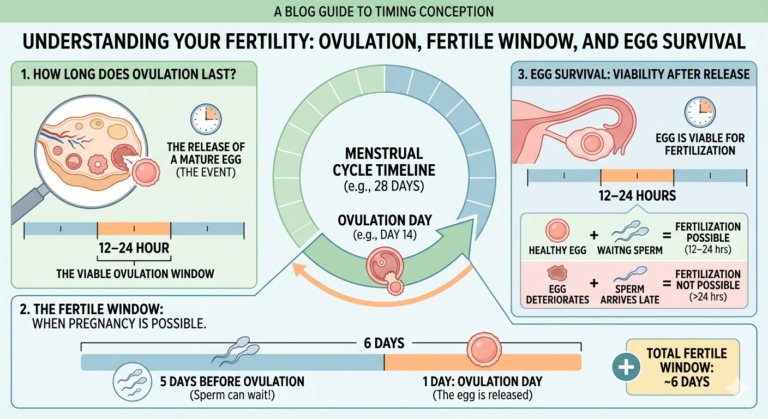
Mittelschmerz occurs around the time of ovulation — which for most women with a 28-day cycle is approximately day 14. However the exact timing depends entirely on your individual cycle length.
The formula is straightforward: ovulation typically occurs 14 days before your next period is due. So if your cycle is 30 days long, ovulation — and therefore any mittelschmerz — would be expected around day 16. If your cycle is 26 days, it would be around day 12.
Use our Free Ovulation Calculator to find your estimated ovulation date based on your personal cycle length — so you know exactly when to expect mid-cycle discomfort if you experience it.
Some women feel the pain just before ovulation as the follicle reaches its maximum size. Others feel it at the moment of ovulation when the follicle ruptures. And others feel a residual ache for a day or two afterward as the released fluid is absorbed. All of these experiences fall within the normal range of mittelschmerz.
Can Mittelschmerz Happen on Both Sides at Once?
Most of the time, mittelschmerz happens on one side only — whichever ovary is releasing an egg that month. Your ovaries generally take turns from cycle to cycle, so the pain often switches sides month to month, though it is also common to feel it on the same side for a few months in a row.
Feeling mittelschmerz on both sides at the same time is less typical but can happen, and is thought to relate to swelling in more than one developing follicle, not just the one that releases an egg. If both-sided pain is new, unusually intense, or paired with fever or heavy bleeding, it is worth checking with a doctor rather than assuming it is mittelschmerz.
Can Ovulation Pain Help You Track Your Fertile Window?
Yes — with an important caveat.
Because mittelschmerz occurs around ovulation it can serve as a useful additional signal that your fertile window is open. If you feel mid-cycle pain on one side and you are also seeing egg-white cervical mucus or a positive OPK test around the same time, these signs together give you a reasonably strong indication that ovulation is happening now or within the next 24 hours.
The caveat is that mittelschmerz alone is not precise enough to use as a sole method of ovulation tracking. Pain can occur slightly before or after actual egg release, and not every woman feels it every cycle. It works best as a supporting sign alongside more reliable methods.
For a complete picture of your fertile window, combine mittelschmerz awareness with OPK testing and cervical mucus monitoring, along with our Free Ovulation Calculator. Learn more in our guide to finding your fertile window.
Treatment for Mittelschmerz: How to Relieve Ovulation Pain
For most women mittelschmerz is mild enough that it does not require any treatment at all. But if the discomfort is bothersome there are several simple self-care steps that can help.
Over-the-Counter Pain Relief
Ibuprofen (Advil, Motrin) or naproxen sodium (Aleve) are the most effective over-the-counter options for relieving ovulation pain. These anti-inflammatory medications work well for the crampy, aching component of mittelschmerz. Acetaminophen (Tylenol) can also help with pain but does not address the inflammatory component.
Important note: if you are actively trying to conceive be aware that some research suggests NSAIDs like ibuprofen may interfere with ovulation or implantation when taken around the time of ovulation. Speak with your doctor about the best pain relief option if you are TTC.
Heat Therapy (Using a Heating Pad for Ovulation Pain)
A heating pad or hot water bottle applied to the lower abdomen on the affected side can provide significant relief from the dull cramping component of ovulation pain. Heat increases blood flow and relaxes the surrounding muscles, helping the discomfort fade more quickly.
Rest
If ovulation pain is catching you off guard during the day, taking 20 to 30 minutes to lie down and rest can help. The pain typically fades on its own within a few hours — rest simply makes the waiting more comfortable.
Hormonal Contraception
If ovulation pain is severe and recurring, hormonal contraceptives — such as the combined oral contraceptive pill — prevent ovulation entirely and therefore eliminate mittelschmerz. This is obviously not an option if you are trying to conceive, but it is worth knowing about for women whose ovulation pain significantly affects their quality of life.
Ovulation Pain vs Other Types of Pelvic Pain — How to Tell the Difference
Not all mid-cycle pain is mittelschmerz — and it is important to know what signs distinguish normal ovulation pain from pain that warrants medical attention.
Mittelschmerz vs. Appendicitis
This is one of the most common worries people have, since ovulation pain on the right side can feel alarmingly similar to appendicitis. Doctors specifically consider mittelschmerz as one of the conditions to rule out when checking for appendicitis in women of reproductive age.
| Sign | Mittelschmerz | Appendicitis |
|---|---|---|
| Timing in cycle | Mid-cycle, ~2 weeks before period | Unrelated to cycle, any time |
| Onset | Sudden, stays localized | Starts near navel, moves to lower right over 12–24 hrs |
| Duration | Minutes to a couple of days, then resolves | Steadily worsens, does not ease on its own |
| Other symptoms | Possible light spotting; otherwise normal | Often fever, nausea, vomiting, loss of appetite |
| Movement/pressure | Usually not much worse | Often worse with movement, coughing, pressure |
When to seek care right away: If pain keeps getting worse instead of easing within a day, comes with fever or vomiting, or is on the right side and does not match your usual ovulation pattern, treat it as a medical concern and get checked — appendicitis needs prompt treatment.
Ovulation Pain vs Ovarian Cyst
An ovarian cyst can cause similar one-sided pelvic pain but tends to be more persistent, more severe, and may occur throughout the cycle rather than just at mid-cycle. A ruptured ovarian cyst can cause sudden severe pain, dizziness, and shoulder pain from referred diaphragm irritation — these symptoms require immediate medical evaluation.
Ovulation Pain vs Endometriosis
Endometriosis can cause pelvic pain throughout the cycle including at ovulation, but it is typically more severe, longer-lasting, and is often accompanied by painful periods, pain during intercourse, and bowel or bladder symptoms. If your mid-cycle pain is significantly disrupting your daily life, endometriosis is worth discussing with your doctor.
Ovulation Pain vs Ectopic Pregnancy
An ectopic pregnancy — where a fertilized egg implants in the fallopian tube rather than the uterus — can cause one-sided pelvic pain that might initially be mistaken for ovulation pain. However ectopic pregnancy pain is typically more severe, may be accompanied by shoulder tip pain, dizziness, and vaginal bleeding, and occurs after a missed period rather than at mid-cycle. This is a medical emergency — if you have a positive pregnancy test and one-sided pelvic pain call your doctor or go to the emergency room immediately.
What Does “Mittelschmerz” Actually Mean (and How Do You Pronounce It)?
Mittelschmerz is a German word that translates literally to “middle pain,” referring to the fact that it happens in the middle of the menstrual cycle, around ovulation. It’s pronounced roughly MIT-uhl-shmerts. It is simply the medical term for ovulation pain, not a diagnosis of anything abnormal. The pain is thought to come from the ovary’s follicle stretching as it prepares to release an egg, and then from the small amount of fluid released when it does.
Can This Happen During Pregnancy?
Technically, no — mittelschmerz is caused by ovulation, and ovulation does not occur once you are pregnant, so true mittelschmerz cannot happen during pregnancy. That said, it is very common to feel similar one-sided pulling or cramping sensations during early-to-mid pregnancy, usually from round ligament pain, the stretching of the ligaments supporting your growing uterus, rather than ovulation.
If you are pregnant and experiencing pain that feels like your old ovulation pain, it is worth mentioning to your provider so they can confirm it is ordinary round ligament stretching and not something that needs attention.
When to See a Doctor About Ovulation Pain
Normal mittelschmerz does not require medical attention. However you should contact your doctor if any of the following apply.
- Your ovulation pain is severe enough to prevent normal daily activities.
- The pain lasts longer than 2 to 3 days.
- The pain is accompanied by fever, nausea, vomiting, or dizziness.
- You have a positive pregnancy test alongside one-sided pelvic pain — seek emergency care immediately.
- The pain is getting progressively worse over time rather than staying at a consistent mild level.
- You experience significant pelvic pain throughout your cycle rather than just at mid-cycle.
Any of these scenarios warrant a conversation with your OB-GYN to rule out conditions like endometriosis, ovarian cysts, or pelvic inflammatory disease.
Frequently Asked Questions
Is ovulation pain a sign that I am fertile right now?
It can be a useful indicator but it is not precise enough to rely on alone. Ovulation pain can occur slightly before, during, or after egg release — so it does not pinpoint your most fertile moment. Combine it with OPK testing and cervical mucus monitoring for a more accurate picture of your fertile window. Our Free Ovulation Calculator can also help you estimate when ovulation is likely to occur.
Does everyone feel ovulation pain?
No. Only about one in five women experience mittelschmerz regularly. Many women ovulate without feeling anything at all. The absence of ovulation pain does not mean you are not ovulating.
Can ovulation pain switch sides each month?
Yes — and this is completely normal. The pain occurs on whichever side is releasing the egg that cycle. Since ovaries typically alternate, the side of the pain often switches month to month.
Can ovulation pain be a sign of a problem?
In most cases no — mild, brief, one-sided mid-cycle pain is normal and harmless. Pain that is severe, prolonged, worsening over time, or accompanied by other symptoms may indicate an underlying condition and should be evaluated by a doctor.
Does ovulation pain affect pregnancy success?
Not negatively — if anything, mittelschmerz is a sign that ovulation is occurring, which is exactly what’s needed for conception. Some women find it a helpful real-time cue to time intercourse during their fertile window. There’s no evidence that experiencing ovulation pain makes pregnancy more or less likely to succeed compared to ovulating without noticeable pain.
Why does my ovulation pain feel worse some months than others?
This is very common and completely normal. The intensity of mittelschmerz can vary depending on the size of the follicle, how quickly it ruptures, the amount of fluid released, and factors like stress and hydration. A particularly uncomfortable month does not indicate anything is wrong.
The Bottom Line
Ovulation pain — mittelschmerz — is a normal, common, and harmless part of the menstrual cycle for many women. A brief twinge or dull ache on one side of your lower abdomen around mid-cycle is simply your body doing what it is designed to do. For most women it is mild, short-lived, and manageable with simple remedies like heat or over-the-counter pain relief.
The key is knowing what normal ovulation pain looks and feels like — so you can recognize it for what it is rather than worrying about it, and so you can tell the difference if something more serious ever arises.
For the complete picture of ovulation-related signs, see our full guide to ovulation symptoms. Want to know exactly when your ovulation pain is likely to strike? Use our Free Ovulation Calculator to find your estimated ovulation date based on your own cycle — and use our Free Period Tracker to log your symptoms month by month so you can spot your personal pattern.
Medical Disclaimer: This article is for educational purposes only and does not constitute medical advice, diagnosis, or treatment. Always consult your doctor, OB-GYN, or qualified healthcare provider for personal health decisions. Read our full Medical Disclaimer.
One Comment